Showing posts with label cookbooks. Show all posts

Wednesday, August 15, 2012

Flashback: Julia Child's Cheese Quiche, Almost (originally published 1/13/08)

Julia Child would have been 100 years old today.  Hopefully Child's kitchen will go back on display soon at the American History Museum in DC (the wing is merely closed for renovations, so it is coming back).  Child-mania has rightfully come back, if it ever died down in the first place, since Julie & Julia (which I have my own ideas on from this post in 2009).  One of my favorite Child recipes was her simple and easy omelette.  A bit more difficult is her cheese quiche, which didn't really turn out well at first.

- - - - -

Julia Child's Cheese Quiche, Almost (originally published January 13, 2008)


I have tackled the master, and the master has won.

At least at first.

A week or so ago I scored this great used copy of Julia Child's French Chef Cookbook. It was a lesser-known edition but the same recipes. I didn't have a Julia Child cookbook, so this was a nice edition to my library. Child, of course, needs no introduction. Born and raised in Pasadena - California, not Maryland, of course - and introduced to French cuisine by her husband, she eventually mastered French cookin', popularizing French cuisine and fine dining in mainstream America. She also was a pioneer in instructional cooking television. She is, of course, the Goddess. How many chefs could say their entire kitchen was transported and replicated in the National Museum of American History? In the Smithsonian for Heaven's sake? Bobby Flay brags about many things, but I doubt he will ever brag about that one. Same for Rachael Ray or Paula Deen or Anthony Bourdain. I'm going on a ridiculous tangent so I'll just go on.

We should demand a Food Network Classic for Julia Child. Her, Jeff Smith and the Galloping Gourmet. Anyway...

I had some eggs burning a hole in my fridge (strange picture in my mind), and a bag of mozzarella ready to turn. I needed to use them. So I found a few quiche recipes in the cookbook and settled on her quiche au fromage (Cheese Quiche, p. 257 in this edition - but aw hell, there are so many editions you should just look it up in the index). My first thought was: aren't all quiches "cheese quiches"? But maybe I'm getting ahead of myself.


As always I cannot reprint the recipe. Just know that I needed to layer the bottom with 2/3 of a cup of Swiss. Only problem: no Swiss in my fridge! But like I said, I had that mozzarella to get rid of, so I used that.  Then I needed to mix egg, nutmeg, salt, pepper and milk. Whoa, hold on. I have no milk either. Yes, that's right, no milk. I did have some buttermilk to use up though. After mixing in the buttermilk, I poured it all into the pie shell, sprinkled on the rest of the cheese and dots of butter (my arteries are hardening already) and, just for some pizazz, a chopped-up shallot. Next I bake it for 30 minutes at 375 degrees.

I occasionally do some dumb things, and after half an hour the quiche was about half-baked. Perhaps the buttermilk meant that I needed to cook it longer. Perhaps - I had to bake it almost twice as long to get it to resemble anything more than runny scrambled eggs.


After a night in the fridge it felt and looked much more like a real quiche. This is probably much closer to what Julia Child had in mind in the first place. And it tastes lovely. So next time I will adjust the cooking time if I use buttermilk. Though I'm curious to see what it'll be like if I actually follow the directions, which I'll do next time. Never mess with the master, at least not the first time around.


Source:

Child, Julia. The French Chef Cookbook (1971, 1968: Bantam Books, New York, NY)

Thursday, December 16, 2010

@Cookbook

It figures: I find out about something inextricably linked to new social media by going to the library and picking up a print-bound cookbook. But that's just what I did the other day, when I found Eat Tweet by Maureen Evans (@cookbook on Twitter; her secondary, recipe-free handle is @cookbookmaureen). If you know Twitter at all, then you can imagine what this is: complete recipes in 140 characters or less. And it's not just the mundane stuff that I've tried to describe in as complete a sentence as I could. Maureen has very complex recipes, boiled down to their grammatical abbreviated essence. Take her October 27 recipe for Beef Wellington:

Beef Wellington: sear,chill 4filet/2T buttr. Brwn 2c mincdshroom/s+p/T oil; simmr9m+⅓c wtwine/¼t thyme; top4puffpastry,wrap filet. 30m@400℉.less than a minute ago via web

Embeddable Tweet courtesy of Blackbird Pie

As you can see, the lingo makes it possible to write a rather long recipe in Twitter format:

"Sear, then chill four filets and 2 tablespoons butter. Brown 2 cups of minced mushrooms, salt & pepper, and at tablespoon of oil. Simmer for 9 minutes, add 1/3 cup of white wine, 1/4 teaspoon thyme. Top with four puff pastries, wrap filets. 30 minutes at 400°F." And she has to find special characters that take up as little space as possible ("1/3", "1/4" and even "°F" all exist as one character each apparently). It doesn't take too long to figure out, and she has a key in the cookbook if you get lost. And now that I have the cookbook (again, library) I can scroll through the recipes even when I am off line!

Sunday, September 26, 2010

Sabbatical Flashback 1: Lidia Bastianich's Tomato Sauce

Again, I feel quite honored that the City Paper named TBS to its Best of Baltimore list for 2010. You just don't expect to hear that too often.

But alas, I am still on a sabbatical from the blog. And yet, it seems like now is a better time than ever to show readers some of what I do here. So over dinner last night (the Carlyle Club has gotten surprisingly inexpensive, especially their dosas, none of which reaches $10), I shot around some ideas with my friends Eric & Alan over what to do. It made sense, a la Minx Eats, to do some flashback posts.

So over the next few weeks (about once or twice a week), as I focus on family and work issues and recover from burnout, I will be bringing some of my favorite posts back for you to read. New readers: this is some insight into how the mind of this blogger works.

The first flashback post dovetails nicely with Baltimore's Book Festival, as it was the inspiration for the post. The recipe in this post is still scrawled on a piece of note paper hanging in my kitchen. Two things to note: as you recall, BBF '08 was subject to an absurdly hard downpour, and it was apparently more difficult to find San Marzano tomatoes in the supermarket than it is now. Hell, I can go to Giant and get them now. I think.

✿ ✿ ✿ ✿ ✿

Lidia Bastianich's Tomato Sauce

(originally posted Thursday, October 2, 2008)

Inspired by Adam Roberts' cooking demo at the first-ever underwater Baltimore Book Festival on Saturday, I went ahead and made pasta sauce. It was the first time I had ever done this, though I have made other tomato-based sauces before. These were usually of the vindaloo and murgh makhani varieties. One would think the ancestors would get me to make an ancestral tomato sauce at some point, but nooooo. Then again, food-wise I best remember my Italian-American grandmother for her Thanksgiving stuffing, and the little pot of coffee she cooked every morning. It wasn't even a tea pot - just a little aluminum saucepan. Perhaps she did make napoletana food (her parents were from a little mountain village outside of Salerno, near Naples), but I never had the fortune to eat it.

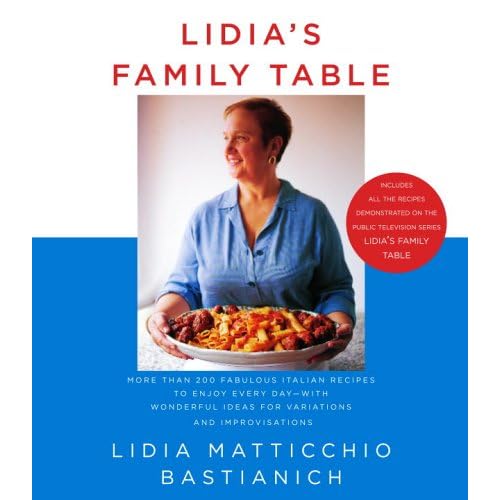
Where was I? Oh yes, pasta sauce. I hunted down the Lidia Bastianich oeuvre at the Towson Library and found the recipe that Adam had made for Saturday's demo. I finally found said recipe in her book Lidia's Family Table. For this recipe, the words "SAN MARZANO TOMATOES" jumped out at me. I had heard the Amateur Gourmet utter these same words the other day, so I went a-searchin' for some San Marzano maters. I found none. Not in Trader Joe's. Not in Super Fresh. I almost got to Whole Foods but it was late and I couldn't be bothered.

I finally did find two cans of organic San Marzano tomatoes, canned by Racconto. Their Bella Terra brand of peeled organic tomatoes have little in the way of preservatives. And what they lack in preservatives they more than make up for in two areas: taste and price. They are some tasty tomatoes. And they are some expensive tomatoes. One 28-oz can cost me $3.30! That's over 1 1/2 times the price of the super-expensive 28-oz can of "organic" tomatoes sitting right next to them. I was deterred enough to buy only one can, since I already had two cans of the local Sun of Italy brand peeled "Italian-Style Whole Tomatoes" waiting for me at home (about $1.75 each). I grew up with Sun of Italy, so I figured they had to be the best the area could muster.


Always the bridesmaids, never the bride...

I wasn't sure how each would fare against the other, since I had no idea where the Sun of Italy tomatoes came from. So I opened each and tried them.

One of these cans tastes better than the other...

I tried the San Marzanos first, and they were a little sweet and not salty at all, very robust and (forgive the word) "tomato-ey". Then I went for the Sun of Italy brand.

***WINCE***

I had never realized just how salty those tomatoes were! They were a bit more acidic than the others, I will say that. Not a bad tomato, and I love most of Sun of Italy's products, but I now know why those San Marzanos cost so damn much.

On to the pasta sauce, which La Lidia and Adam both recommend you should mush up with your fingers.

I did make the mistake of waiting a little too long to mush up those tomatoes. This was a problem because, after starting the pasta water (for my fusilli), I put about eight garlic cloves into a pan of olive oil, then started mushing up the tomatoes - I ended up combining the San Marzanos with one of the Sun of Italy cans. By the time I was done, my garlic was just starting to burn. I salvaged most of it, but had to spoon out a few black slices which floated to the top of my not-too-crushed tomatoes.

It was starting to look less like tomato sauce and more like tomato stew. Don't believe me? Look for yourself:


Trust me: it's tomato stew.

This was, again, because my tomato chunks were just too damn big. Even after adding a cup of pasta water and a big bunch of basil, letting it cook, covered, for 10 minutes, and then uncovered for 5, I eventually just cheated and threw the whole batch of tomato sauce into the blender. And yes, I did take out the basil before doing that.


This was only after I first ate some of it, mind you.

I must have done something right in the end, even with the sprinkles of sugar and cayenne pepper. It did taste good - not as good, I imagine, as if I had only used San Marzano tomatoes and had not burned any of my garlic. But in a mildly salty kind of way, it was a robust and smooth sauce. Especially since I had blended it up. In a big blender.

Besides fusilli, I have been eating it on meatloaf and mashed potatoes. It was alright on the pasta but OH MY GOD it was just wonderful (or as my buddy Jim out in Yucaipa, CA, would say, mostly to irritate me, "exquisite" and "to DIE for"). Yeah, Jim, that one's for you.

✿ ✿ ✿ ✿ ✿

Monday, December 14, 2009

Pickled Grapes

I was listening to Lynn Rosetto-Kasper of Splendid Table gushing over Matt & Tedd, the Lee Brothers, and their new cookbook Simple Fresh Southern. I was nodding at many of the Southern style party recipes they discussed with Rosetto-Kasper. One caught me totally off-guard: pickled grapes.

Again, stop wretching.

Yes, pickled grapes. The Lees said these Thompson seedless green grapes take on an almost olive-like quality. And all you need is equal parts water and vinegar, plus some chili pepper, rosemary and garlic. The sour grape takes on a pleasantly pickled flavor.

Of course I had to try this, but without their cookbook in front of me I had to improvise instead (of course, dumbass didn't bother to actually check the Splendid Table website, where the recipe is clearly posted). So I put about a cup of seedless green grapes in a container, added one cup each water and vinegar, plus three chopped cloves of garlic, a few sprigs of rosemary and a few generous pinches of roasted red pepper flakes. After marinating it all in the fridge overnight, I was pleasantly surprised.


However, I cannot say this was sour at all (maybe I didn't buy Thompson seedless). Instead, the grapes tasted a little sweet. This sweetness was actually magnified by the vinegar and garlic. So it wasn't the same thing that the Lees were promising, but it was good anyway. In fact, it instantly reminded me of the Cambodian style pickles where you just throw some fresh veggies into a water-vinegar-fish sauce-garlic solution and let it quickly marinate. So I wonder how these pickled grapes would taste with a little bit of fish sauce thrown into the pickling brine. I shall have to try this later on.

Since I didn't add the salt that the Lee Brothers so clearly put in their recipe, it's no wonder they come out sweet. I still like the flavor, but some salt or fish sauce still needs to go in. In retrospect, I did things very differently than they did. So next time, I will follow the actual recipe, to see how the Lee Brothers pickle their grapes.

Wednesday, November 11, 2009

Food Ethnography on a Budget: Cambodia II - Nataing, Crispy Rice Cakes and Jícama Pickle

My quest to discover new cuisines at bargain basement prices continues. Already, I've spent more than I had expected or wanted to spend, but a lot of that has been mitigated by my choosing recipes that used ingredients I mostly have lying around. That's an important part in saving money on grocery shopping: figure out what the hell you already have in your pantry. Mine looks a little stranger than most people's pantries, since I have so much variety in it. So to help narrow down the "budget" part for people, I'll try to quantify what I got and how much it cost, and what I already have that most people may need to buy.

Back to Cambodia:

Located in: Southeast Asia
Some common ingredients: jasmine rice, coconut milk, fish sauce, prahok, yucca, pork, papaya, mango, lemongrass
Number of Cambodian restaurants in the Baltimore area: 0
Number of Cambodian restaurants in the DC area: maybe 1
Kind of like: Halfway between Thai & Vietnamese, with a smidge of French

In just a fortnight, I've already learned a good bit more about Cambodian (Khmer) cuisine than I ever did. Of course, I'll never be an expert at this rate - one cookbook and a few websites doesn't make you an "expert" in anything. But I am surprised at the ideas I have already picked up.

From reading the Elephant Walk Cookbook and various websites about Cambodian cuisine, I have found out the following very basic facts about the cuisines of Cambodia:

  • One of the most typical ingredients and flavors of Cambodia is prahok, or fish paste, which takes a long and complicated process to make. It's like ketchup here - it's everywhere. However, different classes will approach it in different ways: the lower classes may be more willing to eat it uncooked, while the upper classes would never think to do such a "gauche" thing.
  • Many tropical flavors are also common in Cambodia, particularly lemongrass, pepper and coconut milk.
  • Most everything is served with some format of rice - whether it's the jasmine rice I just made or the crispy jasmine rice cakes that I tried to make, with varying results.
  • If prahok is the condiment of choice, then amok trey is the dish of choice. It's a fish in coconut milk and steamed in banana leaves. Is it a coincidence that amok is also the Indonesian word for "mad with rage"?
As I've said before, my education in Cambodian cuisine starts with the Elephant Walk Cookbook (partially on Google Books no less), by Cambodian-American chef Longteine "Nyep" De Monteiro and Yankee Magazine writer Katherine Neustadt. A diplomat's wife, De Monteiro was born into an upper class family but loved to eat the food of the much poorer folks that worked in the house. Fortunately for De Monteiro, she and her husband were abroad when the Khmer Rouge seized power in Phnom Penh in 1975; sadly, many in her family were not. In happier times, De Monteiro later found her way to France and eventually to Massachusetts where she opened her Elephant Walk restaurants.

Both De Monteiro and Cambodian food websites I've explored mention that prahok is one of the most common flavors in Cambodian cuisine. It is a bitch to find in Baltimore. Not even the uber-well-stocked H-Mart carries it. They carry pastes made out of just about everything: crab, shrimp, beef, pork, onions, tofu, beans, chilies, on and on and on. But oddly, no fish paste. 700 varieties of fish sauce, but no fish paste. Go fig.

Another common food item is the pickle. These pickles aren't like in the US or India where they sit for a few days and are meant to preserve food. Instead, they are meant to give a quick tang when some is needed.

The meal: nataing

To save money, I tried to find recipes that mostly featured ingredients I had lying around. One recipe, nataing, is a rich pork dish made with ground chili (or paprika), coconut milk, garlic and shallots, among other things. I have no idea if this is a traditional dish or something the chef at Elephant Walk created from flavors and textures that reminded her of home. It was meant as an appetizer in the cookbook but it was a centerpiece of the meal (I used a pickle as my vegetable). And fortunately for me, I had most of the ingredients on hand.

I usually avoid posting recipes from cookbooks, but so many others have already done this with this recipe. Still I will merely link to online recipes, and describe roughly what I put in it (check here, for example).


Basically, you sauté about 1/2 pound of ground pork in either ground dried New Mexico chili or paprika, oil and a cup of coconut milk. Eventually, you add ground peanuts (roasted, unsalted), thinly sliced shallot and garlic (lots of it), sugar and fish sauce. Continue to cook about 10 minutes and serve warm over crispy deep fried rice cakes.

The nataing was an especially rich dish, very sweet with a heavy coconut flavor (duh). I couldn't really taste the saltiness of the fish sauce. De Monteiro suggests this as an appetizer, but about a quarter of this dish with rice cakes and a pickle was very filling for me. It's something I would make again.

I had most of the ingredients already, only needing pork (about $2 for a .6 lb package), a shallot (40 cents - because I ran out) and peanuts ($2.50 for the bag - no, I didn't have any roasted peanuts, but at least I have a nice big bag to use later). So I only shelled out about $5 for new ingredients, with about $2.50 of that being an investment in an ingredient I can keep on using for a while. Most people will have most of these ingredients. If you don't have the coconut milk or fish sauce, expect to shell out another $5 for those. The fish sauce will get you a good bit of mileage if you make things that use it.

The meal: crispy rice cakes


The recipe suggests serving nataing on deep fried crispy rice cakes, filling in and of themselves. These things are made out of pre-cooked jasmine rice, and are quite tedious to make. The recipe suggests laying a flat layer of jasmine rice barely submerged in water in a large pan, and continue to cook and press together until you can remove the whole thing as one piece. This should take about 20 minutes. It took me twice as long. I think I had too thick a layer of rice. And it didn't come out in one piece - more like one piece that broke into two or three smaller ones. Not a problem: I fit it all on a cookie sheet and baked at 200 degrees for about 45 minutes. The middle was still a little soft so I left it in a little longer.

Still not completely dry, I tried to fry them in small pieces in hot oil. They still turned out beautifully - crispy, crunchy and a little nutty. True, the nataing sometimes fell off, but they were a nice and extremely filling combination. One word of advice: don't fry it all up at once. You will not be able to get pre-fried rice cakes back to their original crispiness.

If you don't have jasmine rice, a 1 lb bag will cost around

The meal: jícama pickle


I decided to make a quick pickle for a side dish, to cut through all that meat and grease. Since the Elephant Walk Cookbook says that jícama is enjoyed in Cambodia, and since I had one laying around, I went ahead and pickled that with some tomatoes, basing it off the recipe for De Monteiro's red pepper pickle relish. I was uneasy about this at first, but it turned out to be the best part of an already delicious meal.

I replaced the two roasted red peppers in her recipe with two small Roma tomatoes and a small diced jícama. I marinated that for just a half hour with about eight thinly sliced cloves of garlic, in white vinegar, water, fish sauce and sugar. The result was crunchy and tangy, sweet and sour, and a lovely accompaniment to the nataing. Once again, I have another recipe in my arsenal to use in the future!


My exploration of Cambodian food is not quite done yet. I couldn't find a recipe in the cookboook for what even De Monteiro calls a dish that is as ubiquitous as the hamburger is here: amok trey. There are a few recipes floating around on the internet, and it will be the last one I tackle in my crash course in Cambodian cuisine.

Sunday, September 06, 2009

Potatoes and Peas Vindaloo

I don't think Julie Sahni's Moghul Microwave gets the accolades it is due. It introduced me to the joys of South Asian eatin' years ago, when I was still a young kitchen experimenter - by letting me know that the microwave was just another kitchen appliance, not merely something for heating frozen dinners. One of the first recipes I ever made out of this wonderful cookbook was Sahni's potatoes and peas vindaloo.

First, you need to make one recipe of vindaloo sauce, which (as she points out) is great on hot dogs. After grinding the spices, you nuke onions, garlic and ginger in olive or mustard oil the microwave, then add the ground spices and finally a mixture of water, tamarind paste, kosher salt and tomato purée. I prefer the tubed tomato paste, which gives a much, much stronger tomato flavor. I tried puréeing fresh tomatoes, bought from a farm no less, and the flavor just wasn't that strong for me. So this is one of the few times I would actually recommend using something from a tube instead of something fresh.

This vindaloo sauce can survive for a year in the freezer. Just put it in ice cube trays, then microwave or pan-heat it up if you want to use it. I do this with pesto as well.

Once you have this done, nuke some small potatoes (yes, these I got at a farmer's market, and they do in fact taste better than the ones in the store), with a little salt, a little water and a little olive oil. Next, dump some peas and the vindaloo sauce in with the potatoes, nuke it some more and you are done.

It goes great with basmati rice, which I cooked in the breadmaker with turmeric, butter and craisins mixed in. To flesh out the meal, I stir-fried some broccoli and carrots in more butter and turmeric. I'm hoping to use both the butter and the turmeric more often. I finished it off with some garlic naan and some meat samosas I got at the Kabab Stop in Mount Washington. Good place, but make sure you bring cash if you don't plan to spend more than $10.

Thursday, December 25, 2008

Happy 1st Day of Christmas: Farm Journal Christmas Cookies Galore

I spent much of yesterday evening baking cookies for the family. I did intend to make those my gifts, though I did eventually break down and buy one sister a Wii game (the absolute cheapest I could find, some Looney Tunes game for $15), and before you know it I had shelled out money on gifts for several people. At least I spent no more than $10 to $15 on each person - something the retailers didn't exactly want to hear.

But I went ahead and made those cookies anyway. They are called "refrigerator cookies", not because they're no-bake (they're not no-bake) but because you chill the dough, much like those Toll House and Pillsbury pre-made doughs. This dough makes a much tastier cookie - none of that funny high fructose corn syrup aftertaste! I got this great recipe from the 1972 Farm Journal Christmas Idea Book, now out of print (duh). Still, I think the copyright police will not be happy if I type it out. I can say that they make for tastier cookies when they are just plain, instead of having stuff mixed in with them. Even better, in my novice cookie-baking career, is to slightly undercook them. Leave them in for as long as the recipe requires and you do get a tasty yet crispy cookie. I like mine a little softer.

Maybe I can get away with a narrative description of the recipe: Basically, you take four sticks of butter, cream them and blend in one cup each granulated and brown sugar, then two beaten eggs and a generous dash of vanilla, and finally four cups of flour sifted in with a teaspoon of baking soda and a little salt. Chill for half an hour before baking. The Farm Journal chefs suggest rolling it all into a long roll and just slicing off 1/8" slivers to bake whenever company drops by unexpectedly. I find it easier to just break off pieces, roll them into a ball and flatten them on the cookie sheet. And as I found out last night, it really helps to have slightly wet hands while you're doing this. It keeps the dough from sticking all over your fingers. After twelve minutes in a 375°F oven, cool them on a wire rack. The recipe says it yields 18 dozen. It does not. It's more like 6 dozen, and those are pretty thin, average diameter cookies.

The recipe calls for variations, including coconut, pecans and chocolate. I divided the dough into eighths and chose different add-ins for each eighth (they are also good plain):

  • chocolate / chocolaty chocolate chip - three tablespoons of cocoa + a dash of vegetable oil makes chocolate sugar cookies, but add chocolate chips to really get a chocolaty taste.
  • assorted chip cookies - roll into one eighth of the dough about an 1/8 c to a 1/4 cup of chips. Use a variety of chips - I had semisweet chocolate chips, white chocolate chips, cinnamon chips, and butterscotch chips. A thin cookie with lots of chips will need less time to cook and brown faster.
  • chai spice cookies - I got this idea after watching Sunny Anderson of Cooking for Real on this year's Food Network Conglomeration of Stars Christmas Cooking Special. But I couldn't remember exactly what she put in, so I improvised with what I could remember: about 1/2 tablespoons of cardamom, a teaspoon of cinnamon and a few dashes of freshly ground black pepper, all ground. It still makes for a tasty cookie, even with just those spices.
  • anise cookies - I never realized how well anise and cloves went together. Grind together 1/2 a teaspoon of anise seed and about 6 cloves, and add that to plain dough. Even though the anise is very subtle, it still somehow cuts through everything else.
I did have to experiment with some other flavors, just to see what would happen. The results were somewhat mixed. I tried the following add-ins on the last few bits of dough:
  • balsamic and olive oil cookies - reduced balsamic vinegar on top of half the cookie, olive oil on the other half.
  • cayenne cookies - cookies with a dash of cayenne pepper mixed in. I also played with the thought of mixing in some Old Bay, but that just didn't seem right.
  • honey-drizzled cookies - speaks for itself
  • peanut butter-jelly cookies - a cookie with a little peanut butter mixed in, topped with jelly
  • smoked paprika cookies - again, self-explanatory
Some of these cookies just did not turn out. Thank God I used a silicone baking sheet, which made cleanup much easier


  • The biggest failure was the balsamic-olive oil cookie (bottom two in the photo above). I made two and they turned into big , super-burnt lace cookies. Inedible to say the least.
  • The honey cookies (second row from the top in the photo above) were also a big disappointment. Plus, what little I could salvage from it was absolutely inedible, with a strange flavor that tasted nothing like honey.
  • The peppery cookies (cayenne in the second row, smoked paprika in the top left corner) turned out better. They're fine if you like spicy cookies.
  • The one that turned out the best was the PBJ cookie, though I'm not the biggest fan of peanut butter in my cookies.
Ah, the wonder of accomplishment! And now I don't think I will ever want to look at another cookie again.

These are all the ones that did turn out.

Thursday, December 11, 2008

Slow-Cooker Venison Stew

It's good to have family, however extended it may be, that hunts on a regular basis. Cathy's father-in-law offered me a few nice pieces of venison that he had stocked away in the freezer. I got three pieces. I've already used one. I still have one roast and another piece, I admit I'm not sure what cut it is, in my freezer.

What I did the other day with the first piece was a slow cooker stew. I bought some barbecue sauce and some veggies, admittedly planning to wing whatever I was going to make. But I wanted some guidelines, so I looked in my copy of Beth Hensperger and Julie Kaufmann's Not Your Mother's Slow Cooker Cookbook. I thought I'd find a recipe for a beef roast, and lo and behold, out of the index pops up this recipe for Venison Stew. On a hunch, I turned to the recipe and it turned out that I had all the ingredients for it.

As is always the case with recipes from cookbooks, I can't reprint it here. I will say that I cut the venison up into chunks, browned it in bacon drippings and threw it in the slow cooker. After adding various other veggies - carrots, onions, potatoes (these aren't in the recipe), etc, I dumped in some chicken stock (not beef) and white wine (not red, as the recipe suggests). I used chicken stock instead of beef because that's what I had. I used white wine instead of red because Cathy's father-in-law suggests using white wine when you cook venison, in order to remove its gamey taste.


Well, eight hours of slow cooking it in white wine and chicken stock (adding bacon and mushrooms five hours in) certainly did that! It also made it nice and soft. Plus, the balsamic vinegar I added at the end gave it a nice little tang.

Now I have enough venison stew to last me the rest of the week! Oh boy, deer meat for dinner, lunch - even breakfast!

Wednesday, October 29, 2008

Answer: Roasted Fennel and Two O'Clock Club Corn Bread


Question: what do I eat with the pulled venison my sister's father-in-law made the other day?

The only reason I roasted some fennel this evening is because I got some at the Waverly Market on Saturday morning. I thought I'd try to find a recipe to fit it. And boy howdy, did I find one! It's a roasted fennel recipe from Adam Roberts' Amateur Gourmet website posted almost three years ago. It comes ultimately from the Barefoot Contessa di Hamptons, Ina Garten herself. He talked it up so much that I just couldn't help myself - I had to roast this fennel. This simple version I found is a variant thereof: just cut off the base and the stalks, halve lengthwise, cut into 1/2 inch slices, and roast at 400°F covered in olive oil, salt and pepper (and maybe balsamic vinegar). Adam's version also has a sprinkle of parmesan halfway through the roasting process, and roasts it for a total of an hour. The shorter version keeps it in the oven for 20 minutes. I went halfsies and ate at 40 minutes. Wow! It is just, wow!

Wow. And it's not even done yet.

Along with that I had some cornbread, kind of a hybrid of Southern "savory, yellow cornmeal" style and Northern "sweet, white cornmeal" style. The Maryland kinds are sometimes white and sometimes yellow, a little sweet but not too much, sometimes in a square pan and other times in a cast iron skillet. In this case, it was pretty savory, with yellow cornmeal (Ah, Maryland, always in the middle. Such a silly place). It comes from John Shields' wonderful Chesapeake Bay Cookery book. It's a Baltimore-though-originally-Deep-South recipe for Two O'Clock Cornbread. I can't relay the recipe, as it's not online (but it's on p. 226 of his book). I did alter the recipe a wee bit, replacing the milk (which I actually don't have on hand) with buttermilk (by the way, buttermilk thaws beautifully once you take it out of the freezer). 30 minutes later at 425°F and it was almost perfect.


The one little problem was that burned bottom. Oh well, at least it didn't taste burnt. In fact it was quite good.

Yes, I need to clean my stove.

The fennel, the cornbread, the venison - all went together beautifully! Add a "Baltimore Style" McHenry Beer from Clipper City - a "1940's style" beer which, I think, uses 100% malted barley (if I read their website right) - and it's even better.

This one doesn't come out as well as its clearer, flash photographed twin at the other end of this post, but I like the lighting on this one better.

Thursday, October 02, 2008

Lidia Bastianich's Tomato Sauce

Inspired by Adam Roberts' cooking demo at the first-ever underwater Baltimore Book Festival on Saturday, I went ahead and made pasta sauce. It was the first time I had ever done this, though I have made other tomato-based sauces before. These were usually of the vindaloo and murgh makhani varieties. One would think the ancestors would get me to make an ancestral tomato sauce at some point, but nooooo. Then again, food-wise I best remember my Italian-American grandmother for her Thanksgiving stuffing, and the little pot of coffee she cooked every morning. It wasn't even a tea pot - just a little aluminum saucepan. Perhaps she did make napoletana food (her parents were from a little mountain village outside of Salerno, near Naples), but I never had the fortune to eat it.

Where was I? Oh yes, pasta sauce. I hunted down the Lidia Bastianich oeuvre at the Towson Library and found the recipe that Adam had made for Saturday's demo. I finally found said recipe in her book Lidia's Family Table. For this recipe, the words "SAN MARZANO TOMATOES" jumped out at me. I had heard the Amateur Gourmet utter these same words the other day, so I went a-searchin' for some San Marzano maters. I found none. Not in Trader Joe's. Not in Super Fresh. I almost got to Whole Foods but it was late and I couldn't be bothered.

I finally did find two cans of organic San Marzano tomatoes, canned by Racconto. Their Bella Terra brand of peeled organic tomatoes have little in the way of preservatives. And what they lack in preservatives they more than make up for in two areas: taste and price. They are some tasty tomatoes. And they are some expensive tomatoes. One 28-oz can cost me $3.30! That's over 1 1/2 times the price of the super-expensive 28-oz can of "organic" tomatoes sitting right next to them. I was deterred enough to buy only one can, since I already had two cans of the local Sun of Italy brand peeled "Italian-Style Whole Tomatoes" waiting for me at home (about $1.75 each). I grew up with Sun of Italy, so I figured they had to be the best the area could muster.


Always the bridesmaids, never the bride...

I wasn't sure how each would fare against the other, since I had no idea where the Sun of Italy tomatoes came from. So I opened each and tried them.

One of these cans tastes better than the other...

I tried the San Marzanos first, and they were a little sweet and not salty at all, very robust and (forgive the word) "tomato-ey". Then I went for the Sun of Italy brand.

***WINCE***

I had never realized just how salty those tomatoes were! They were a bit more acidic than the others, I will say that. Not a bad tomato, and I love most of Sun of Italy's products, but I now know why those San Marzanos cost so damn much.

On to the pasta sauce, which La Lidia and Adam both recommend you should mush up with your fingers.

I did make the mistake of waiting a little too long to mush up those tomatoes. This was a problem because, after starting the pasta water (for my fusilli), I put about eight garlic cloves into a pan of olive oil, then started mushing up the tomatoes - I ended up combining the San Marzanos with one of the Sun of Italy cans. By the time I was done, my garlic was just starting to burn. I salvaged most of it, but had to spoon out a few black slices which floated to the top of my not-too-crushed tomatoes.

It was starting to look less like tomato sauce and more like tomato stew. Don't believe me? Look for yourself:


Trust me: it's tomato stew.

This was, again, because my tomato chunks were just too damn big. Even after adding a cup of pasta water and a big bunch of basil, letting it cook, covered, for 10 minutes, and then uncovered for 5, I eventually just cheated and threw the whole batch of tomato sauce into the blender. And yes, I did take out the basil before doing that.


This was only after I first ate some of it, mind you.

I must have done something right in the end, even with the sprinkles of sugar and cayenne pepper. It did taste good - not as good, I imagine, as if I had only used San Marzano tomatoes and had not burned any of my garlic. But in a mildly salty kind of way, it was a robust and smooth sauce. Especially since I had blended it up. In a big blender.

Besides fusilli, I have been eating it on meatloaf and mashed potatoes. It was alright on the pasta but OH MY GOD it was just wonderful (or as my buddy Jim out in Yucaipa, CA, would say, mostly to irritate me, "exquisite" and "to DIE for"). Yeah, Jim, that one's for you.

Sunday, August 03, 2008

Cochinita Pibil

I had friends over on Saturday night for dinner. Originally I had planned this around my friend Jim visiting from California (so difficult to get him on a plane). But plans changed, mostly due to skyrocketing fuel prices and airplane fees, so he went on vacation locally with his family instead. But I still had my local friends over anyway.

For them I made cochinita pibil, one of my most favorite Mexican dishes. It's not the Americanized "Mexican" food we have here, and it's definitely not what you imagine when you think of Mexican. I've eaten it a few times in California (The best place to find it in the Inland Empire? The Casa Maya in Mentone) , and one buddy made it for me one time I was visiting. I've even eaten it at a diner in the historic section of Mexico City - have no idea if it's there anymore - and I'm pretty sure I had it at least once in Mérida, Yucatán - it is, after all, not a national but a Yucatecan dish.

There are many recipes for cochinita pibil on the internet and in cookbooks, and a few ways to prepare it, be it the oven, the Dutch oven or the slow cooker. The important thing is to marinade it overnight, wrap it in banana leaves and then cook it for a few hours. I wanted to break out the slow cooker, so I wouldn't have to stand there and monitor it all day. After searching for a good slow cooker version I found this version translated from the standard oven-based recipe by Rick Bayless himself (here's the most authentic version of his recipe, which requires building a pit to cook it in the ground).

This recipe is relatively simple, if you have everything you need, but it does take a little preparation. You need at least 2 to 3 lbs of pork butt/shoulder - I got a 5 lb picnic shoulder from Giant for just $7 on sale, and ended up cooking the whole thing. With that you also need a chopped up white onion, banana leaves to wrap it in, and some achiote paste. Achiote paste is quite easy to find in Southern California, but almost impossible to find here. So came the more time consuming task of making my own achiote paste from scratch. Again, there are many online, ranging from the simple to the elaborate. I chose something on the more elaborate side, and set my spice grinder to work.

Ingredients for the achiote marinade

The most difficult ingredient to find is the annatto seed, which you can find in any supermarket with a very well-stocked Latin American or Mexican section. And you should be able to find it in any Latino or Mexican market. The second most difficult thing to find is the bitter (or Seville) orange. In fact, it is much more difficult to find than annatto seed, but unlike annatto you can make a reasonable substitute for bitter orange by mixing orange juice with either lime or lemon juice. If you can find the real stuff, however, use it. After running all over Baltimore I found a bottle of Goya bitter orange / naranja agria marinade at Wegman's (which I later saw at the Giant just a 20 minute walk from my place).

I finally settled on this recipe from Chow.com, since it had some interesting flavors and since I had almost all the ingredients. I won't quote the recipe, but it calls for pan-seared garlic, cloves,whole cumin, whole coriander seed, kosher salt, allspice berries and black peppercorns, in addition to the annatto seeds and bitter orange juice. I had no allspice berries, but since most recipes don't call for them, I didn't sweat it.

After grinding the annatto and other seeds, blending the bitter orange juice and the garlic, and mixing it all together, you get something that looks like this:

It should be smoother, but it still worked.

It's difficult to describe the unique taste of this stuff, but it is definitely not what you think of when you think "Mexican" cuisine.

After that, score the pork butt and rub the achiote all over it, put it in a large ziploc bag or a sealed-up bowl to marinate overnight, and then cook the damn thing. To paraphase Rick Bayless' recipe: he suggests lining a slow cooker with the banana leaves (So far I have only been able to find them at Wegman's; not even H-Mart has them!), put in the pork, dump in the marinade and about 1/2 cup of water (since I had more pork, I just added more water), then wrap the pork in the rest of the banana leaves over it and slow cook it for at least 6 hours. Since he never says to do it on low or high, I had to search for that elsewhere. What few authorities I found suggested either low for 10 to 12 hours, or high for 6 hours. So I went for 6 hours on high.

The marinade the night before

And in the slow cooker. Make sure you have enough banana leaves to completely cover it. Okay, you technically don't need them in the slow cooker, but they make for a better presentation and do, in fact, keep the meat a little moister.

There is one final, indispensable component to cochinita pibil, and it's not tortillas, although those are helpful. You always eat it with red onions that have been pickled in bitter orange juice and a little sprinkle of salt for several hours. So simple, Bayless just spends two sentences mentioning how: just slice a red onion thin and marinate in the juice (I used a cup of bitter orange juice for one large red onion) and sprinkle some kosher salt on it.

This is all you need to make it. And a little salt. A few hours later, this becomes...

...this!

Throw it in a plastic baggie and voila! It should be marinated much longer, but I didn't have much longer.

And you eat those onions with this, the finished cochinita pibil.

It's startling how the meat just falls off the bone after cooking it for this long, too. Eat it with some rice, black beans and tortillas, and fresh salsa (Bayless recommends homemade roasted habanero salsa, which they would eat in Yucatán, but I don't like my mouth to hurt). Wonderful stuff!

Wednesday, May 07, 2008

What to do with a quarter peck of oysters


After I got back from Jerry D's of Harford Road with mah urshters, I put the oysters, bag and all, in a large plastic bowl and shoved 'em into the fridge. Later on I flipped through John Shields' excellen Chesapeake Bay Cooking, even though the oysters were from North Carolina, which is almost close enough.

Lo and behold, the perfect idea! Chincoteague Single-Fried Oysters! The folks in Chincoteague just get Misty over their oysters.* And why not? It's like, well, like us getting misty over oysters, or crabs even more. Sadly I cannot reprint the recipe, but John says that the version in his cookbook comes from a local authority, Mrs. Alma Madanick, a "shining star of the Chincoteague culinary world" (Shields p. 72). I think I can at least say that the recipe calls for equal parts cracker meal (like crushed saltines) and flour for every pint of oysters. I had a quarter peck, which amounts to about 4 1/2 pints (a little over 2 quarts, or a half gallon - about 2.5 liters for those of you keeping track). That's before the oysters were shucked.

I didn't realize just how difficult it is to shuck an oyster, but after a while I was prying open one every minute. Yes, that's slow, okay? I ended up with about 12 to 15 oysters all told. All the while, two things ran through my head:

  1. I am actually taking a life here. Much like I am when I steam crabs. Part of the circle of life I guess. Just like what'll happen to all of us when the zombies come to get us...
  2. Damn, I should eat one of these on the half shell right now!
I don't know why I didn't. I guess the thought of fried oysters was too enticing to make me eat them raw. God knows I would have been fine with it.

I also got about a quarter cup of the oyster liquor (don't ask me what fraction of a peck that is), and it is sitting in my freezer waiting for future uses.


As for the oysters themselves: I changed the recipe just a wee bit, reducing it to two parts flour, one part each cracker meal and corn meal, plus a generous sprinkling of Old Bay (of course). They were still very delicious, fried for three to five minutes in a shallow pan of hot corn oil until golden brown. Paired with those deviled green beans that I found earlier I was very happy. Sure, maybe next time I'll save myself the trouble and use pre-shucked oysters. But at least I now know I don't have to.

Dem urshturs, befoor...

...and after.

And in case you wondered what deviled green beans look like, wonder no more. They really are very good, sweet, tangy and savory all at the same time.

Source:

Shields, John. Chesapeake Bay Cooking (1998: Broadway Books, New York, NY)

* Please tell me you got that reference.

Saturday, February 02, 2008

A few recommendations...

Those of you who write blogs know that it can at times be, well, time-consuming. Especially for such a focused blog like this one. As such, there are too many restaurants and too many meals, too many funny videos and too many other things I do that I just don't get to mention. So here they are: a few things I haven't mentioned lately that don't really merit a whole post (unlike my recent trip to Green Spring Station - I'll post on that soon).

  • If y'all read about my excursion off Exit 17 to Woodlawn, you'll remember that the Shaheen Indian-Pakistani Restaurant was recommended to me. Well I went - twice. Pretty good stuff. 100% halal for the observant Muslim diner. Their goat is some of the best and least bony I have eaten in a while. $5.99 per lb. to take out their lunch buffet (the first I've seen do it by the pound), plus a section of desserts. Good stuff.
  • Plus, did you know my post about that very subject is the first one that comes up when you Google "shaheen security square mall"?
  • Speaking of which: just this past week I stopped by a place off Rossville and Bel Air Road, the recently opened Mount Everest (for which I can find no links whatsoever), which serves Nepalese and Indian food, as well as Italian, Greek and American. It's the "pizza-subs-and-curry" place turned into a festive-looking Nepalese restaurant. Their chicken tikka masala is a bit dry, despite floating in all that tikka masala sauce. Their saag paneer (Indian cheese in spinach) is quite good. $8.99 per box.
  • I stopped by Pepe's Pizza on Falls Road. For $3.45 after tax I got enough Hawaiian pizza to last me two meals. Good and filling pizza. BTW: my recent Exit 23A post is the second hit when you Google "pepe's pizza mount washington".
  • My sister treated me to dinner tonight at Damon's Grill (she's so nice). There is a smattering of locations in Maryland, but it's mostly based in Pennsylvania and Ohio. We got some great burgers for $7.95 plus 50 cents per topping. Get too much (fried mushrooms, fried onions, guac and Provolone cheese) and it'll all slip and slide off. Her mudslide was also tasty. The apple cobbler that we split was okay. I've had better, but it was decent.
  • Oh, Cloverfield rocked.
  • Whole Foods' rice milk really isn't all that bad when compared to the real thing, at least in hot chocolate and in cereal. Just avoid rice drink - it's not the same.
  • And I made one more recipe from a book I bought in California and have had on my shelf for a while, Paulette Mitchell's 15-Minute Single Gourmet: 100 Deliciously Simple Recipes for One (1996: Macmillan, New York, NY). It was her basil pesto. It didn't turn out the way it should have - either I had too little basil or else I used walnuts instead of pine nuts. It's more like a chunky basil paste. it's still edible, just not what I had had in mind.
  • And I'm still waiting to take advantage of the smokelessness of the local bars. They did this too in California when I lived there. Even though I am a militant non-smoker, at first I thought it was silly. I mean, it's a bar for God's sake. But it didn't hit California businesses bad at all - most of them just installed outdoor patios if they didn't already have them, and they worked just fine. Put up a few outdoor heaters and Maryland's bars will be just fine too.

Sunday, January 20, 2008

Seasoned Mushrooms a la Apicius

As I said before, I held a little housewarming for some friends. And lucky me, I forgot to tell everyone there would be food, so everyone had already eaten by the time they got there. And so I spent God knows how much money on food so that I would be stuck eating most of it. At least the beer and wine didn't go to waste.

One thing I like to make for parties is a recipe that wowed my friends in Riverside. Sadly, I cannot claim the credit for it. The real credit goes to an Italian guy who lived about 1,500 years ago. Caelius Apicius may have named himself after famous 1st century AD gourmand Marcus Gavius Apicius* on purpose - those silly Romans! - and wrote down what many Classical scholars consider to be the world's earliest (or earliest-known) cookbook, De re coquinaria. I have found a few modern conversions and adaptations (mentioned below), and I have wanted to try so manyof them. It's especially weird to see a whole cookbook of Italian cooking with nary a tomato or pasta to be seen; at the time, those were still isolated respectively to Mexico and China.

One of my favorites is this one, seasoned mushroom stems, which uses olive oil, honey and garum - which exists only today in the very similar fish sauces of Southeast Asia - along with lovage as a seasoning for mushroom stems. The original recipe is as follows:

Boletos aliter: Tirsos eorum concisos in patellam novam perfundis, addito pipere, ligustico, modico melle; liquamine temperabis; oleum modice. (Apicius 315)
A translation from the original Latin by author Ilaria Gozzini Giacosa is in the book A Taste of Ancient Rome, translated from the Italian into English by Anna Herklotz (see for yourself on Google Books; scroll down to page 65). It goes as follows:
Another recipe for mushrooms: Put the chopped stems in a clean pan, add pepper, lovage, and a bit of honey; mix with garum; [add] a bit of oil. (Author's addition; Gozzini Giacosa, p. 65)
My own version of this, which I adapted from the wonderful Classical Cookbook and by Andrew Dalby and Sally Grainger, is as follows: for each pound of mushrooms (I use portabellas, but criminis are fine too) use one cup each of honey, olive oil and fish sauce, plus a few sprigs of lovage (or if you can't find that, fresh celery leaves). Boil everything but the mushrooms and then throw in the mushrooms, and reduce the liquid by half.

After years of making it off the top of my head, I found that I was way off the actual recipe as converted into modern measurements by the authors. Again, Apicius gave no exact measurements so anything a modern chef or author could come up with would be an approximation. But Giacosa recommends for each pound of mushrooms: 2 T of olive oil to 1 T of fish sauce (garum) to 1/4 tsp of honey - that's more like a 2 to 1 to 1/12 correspondence. Add to that a handful of lovage for each pound of mushrooms. Also the recipe calls for mushroom stems, not entire mushrooms. I still like mine - they are wonderfully tangy, salty and a little sweet all at the same time. But I'll have to try the somewhat closer one at some point. It saves on olive oil, honey and fish sauce.


This is all you need to make this - 1/2 lb of mushrooms is quite easy enough. Again, use the leaves from the celery - just the leaves.

Source:

Gozzini Giacosa, Ilaria. A Taste of Ancient Rome, translation and adaptation of De re coquinaria by Caelius Apicius, translated from the Italian by Anna Herklotz (1992: University of Chicago Press, Chicago, IL)


* pronounced "MAR-kus GAH-wee-us uh-PICK-ee-us"

Sunday, January 13, 2008

Julia Child's Cheese Quiche, Almost

I have tackled the master, and the master has won.

At least at first.

A week or so ago I scored this great used copy of Julia Child's French Chef Cookbook. It was a lesser-known edition but the same recipes. I didn't have a Julia Child cookbook, so this was a nice edition to my library. Child, of course, needs no introduction. Born and raised in Pasadena - California, not Maryland, of course - and introduced to French cuisine by her husband, she eventually mastered French cookin', popularizing French cuisine and fine dining in mainstream America. She also was a pioneer in instructional cooking television. She is, of course, the Goddess. How many chefs could say their entire kitchen was transported and replicated in the National Museum of American History? In the Smithsonian for Heaven's sake? Bobby Flay brags about many things, but I doubt he will ever brag about that one. Same for Rachael Ray or Paula Deen or Anthony Bourdain. I'm going on a ridiculous tangent so I'll just go on.

We should demand a Food Network Classic for Julia Child. Her, Jeff Smith and the Galloping Gourmet. Anyway...

I had some eggs burning a hole in my fridge (strange picture in my mind), and a bag of mozzarella ready to turn. I needed to use them. So I found a few quiche recipes in the cookbook and settled on her quiche au fromage (Cheese Quiche, p. 257 in this edition - but aw hell, there are so many editions you should just look it up in the index). My first thought was: aren't all quiches "cheese quiches"? But maybe I'm getting ahead of myself.


As always I cannot reprint the recipe. Just know that I needed to layer the bottom with 2/3 of a cup of Swiss. Only problem: no Swiss in my fridge! But like I said, I had that mozzarella to get rid of, so I used that. Then I needed to mix egg, nutmeg, salt, pepper and milk. Whoa, hold on. I have no milk either. Yes, that's right, no milk. I did have some buttermilk to use up though. After mixing in the buttermilk, I poured it all into the pie shell, sprinkled on the rest of the cheese and dots of butter (my arteries are hardening already) and, just for some pizazz, a chopped-up shallot. Next I bake it for 30 minutes at 375 degrees.

I occasionally do some dumb things, and after half an hour the quiche was about half-baked. Perhaps the buttermilk meant that I needed to cook it longer. Perhaps - I had to bake it almost twice as long to get it to resemble anything more than runny scrambled eggs.


After a night in the fridge it felt and looked much more like a real quiche. This is probably much closer to what Julia Child had in mind in the first place. And it tastes lovely. So next time I will adjust the cooking time if I use buttermilk. Though I'm curious to see what it'll be like if I actually follow the directions, which I'll do next time. Never mess with the master, at least not the first time around.


Source:

Child, Julia. The French Chef Cookbook (1971, 1968: Bantam Books, New York, NY)