This is it, the final post! The last one of the whole damn blog. It's a weird milestone, but it wasn't a sudden decision. Actually, I decided this somewhere during my madcap overview of state foods, somewhere between Georgia and Illinois (I can’t remember exactly), and well after I realized that I just no longer had the money, time or gas to go back around the Beltway again. But still, after 6 ½ years (exactly - the first two posts were on September 12, 2006), 1,780 posts, 2,977 comments (as of this posting), about 310 recipes attempted (most of which were somebody else's recipes I was interpreting) and about 810 eateries, festivals, markets and food trucks visited, it’s time to pack it in. The “blog fatigue” has taken a strong hold, and just like Ray Lewis (RAVENS W00000000T!!!!!!), Tina Fey (30 ROCK W00000000T!!!!!!) and Benedict XVI (zuh? Er, RAVENS W00000000T!!!!!!), I want to go out on a high.
No, not “I want to go out high”. I want to go out ON A high. Good grief.
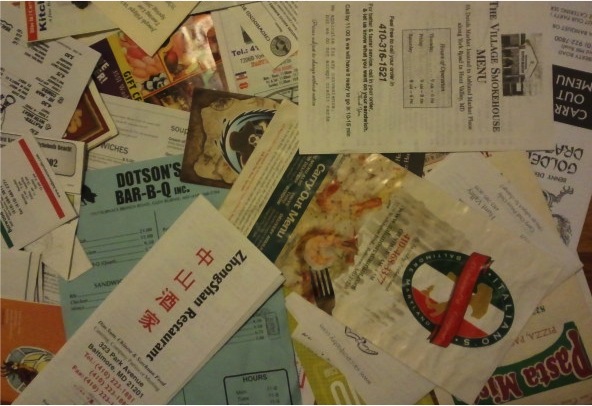
I’ve learned a lot these past several years of being part of the Baltimore food blogging community. I’ve tried to winnow that down to a list, with items in no particular order. Some are more particular than others. To wit:
1. There are a lot of good crab cakes in this city. And a lot of bad ones. But the bad ones are usually still better than the ones you find elsewhere.
2. You just can’t buy a stand mixer cheap, even from your favorite thrift store. You just can’t. Don’t do it.
3. You can really smoke pork barbecue in the slow cooker. And in the oven. Beef brisket, too.
4. Eating something you’ve grown is pretty damn satisfying, even if all you got from several broccoli seeds was one head the size of your fist.
5. Restaurants can actually improve, though how much so is debatable.
6. They can also get worse.
7. You don’t have to spend a fortune to get excellent food or service.
8. But you CAN end up spending a fortune and get craptastic service instead.
9. Chinese food in the US is a bit different than it is in the UK or in the Netherlands. Or, especially, in China.
10. You can actually pop sorghum at home. Amaranth, too. And while a dome popper (that rotates the kernels) might be preferable, you can get away with using just a stainless steel stockpot.
11. I now know how to make poi.
12. And sushi.
13. And beer.
14. And New York, New Haven and Chicago style pizzas. I just need to make sure they stay flat.
15. There are some good eats from food trucks. Here and in DC. And LA.
16. Recipes are there for a reason. Use them.
17. And read through them first!
18. That said, so long as you know where to improvise (and what to search for on the internet), you don’t have to follow the recipe to the letter.
19. As much as the woman irritates the hell out of me, I have to admit that Sandra Lee’s heart is in the right place in trying to help home chefs without a lot of scratch make something edible. She doesn’t always succeed (ahem), but at least she tries. To paraphrase Sophia Petrillo, her heart’s in the right place but I don’t know where her brain is.
 20. Still, what’s up with those goddamn tablescapes!?
21. Guy Fieri, on the other hand... I have no friggin’ clue why he’s still on TV.
22. Hooray for the people who thought up Restaurant Week. And brewpubs. And Dogfish 90 Minute IPA.
23. I now know that people in South Dakota deep fry raw beef and eat it on toothpicks. That’s about as All American as you can get.
24. I have grown an appreciation for wine, but I will always be a beer person at heart. Double IPA please, only one if I have to drive somewhere, and only water until I can drive.
25. Oh yes, don’t drink and drive.
26. Homemade tomato sauce has totally ruined the stuff in a jar for me forever. No high fructose corn syrup! (Seriously, look at the ingredients the next time you buy store bought.)
27. Locally sourced really does taste better than the stuff they ship 2,000 miles across three time zones just so we can have cauliflower out of season.
28. Sometimes all you want is a nice, juicy hot dog. Without bacon. That’s right, I said “without”.
29. Yes, I love bacon, don’t get me wrong. But everything in moderation. If you have bacon all the time, it’s not special. (Didn’t Margaret Cho say that once?)
30. That said, this blog has re-introduced me to the pleasures of cooking with bacon grease. In moderation.
31. That Bitchin’ Kitchen show is pretty damn strange, and it rocks.
32. Nigella Lawson has such a great way of phrasing things on her shows and in her cookbooks. It’s such fun to read her.
 33. If you have the time to explore food in local places you never get to visit, take it. Otherwise someone raised in Lansdowne won’t find the excellent hot dogs in Dundalk, fried oysters in Edgewood or Chinese and Japanese food in Overlea that he should be discovering (or the pit beef in Lansdowne and Arbutus that folks in Dundalk, Edgewood and Overlea are missing, too - and yes there is also good pit beef in Dundalk and off Route 40).
34. The internet is a great repository for recipes, but there will always be a place for cookbooks.
35. I wish there were more people out there like Jolene Sugarbaker, the Trailer Park Queen. Someone at LOGO get her a cooking show, dammit.
36. Seriously, what is up with this ridiculous "throw it up overnight Frozen Yogurt shop" craze? It has to end sometime. So long as the people working all of them find other work. Don't want anybody out of a job.
37. It's El-li-KIT City, not El-li-COT City! Jeez Louise, people.
38. A few things I regret not having blogged about these past few years:
- Jamaican food, particularly jerk chicken
- The Charleston, though that one is because I could not afford it. Still can't afford it. Likely never will. Wah waah.
- How to steam crabs. Sure we all know how to do that here, but I never actually got around to writing an actual how-to post.
- The Museum Restaurant, now snuggled in the former space where the Brass Elephant used to be.
- More family recipes, and maybe an exploration of the hallowed Woman's Day Encyclopedia of Cookery.
- More posts about food, food production and nutrition writing. I've read and/or listened to on audiobook more than a few lately that really deserve more of a mention on a site like this one:
- Animal, Vegetable, Miracle by Barbara Kingsolver and family
- The Bucolic Plague: How Two Manhattanites Became Gentleman Farmers by Josh Kilmer-Purcell
- The American Way of Eating by Tracie MacMillan
- In Defense of Food by Michael Pollan (also been meaning to check out Eric Schlosser's Fast Food Nation. That one's next on the bucket list).
41. You want the essence of "Smalltimore"? When you are out with your friends getting pizza at Iggie's and you see a member of the Ace of Cakes show outside the window, then you mention it on the blog, and then she comments afterwards! Please keep rockin' this town, Mary Alice, and all y'all at Charm City Cakes. That's Smalltimore.
 And that’s it. I can’t really sum up 78 months worth of posts in one post much less one paragraph, so I’m not even going to try. But I will say that I have met a lot of interesting and talented people in this Baltimore food blog community, and made friends and shared experiences I am lucky to have. Keep reading their food blogs, because they have forged into directions I had only thought about once in a long while, and many have been able to profit off of the experience (some of them have actual books you can buy now). I am horrified at the thought of forgetting somebody and not going back to correct it, with this being in my final post and all. So instead I thank all of you in the Baltimore food blog community as a whole. Y’all are awesome (yes, I meant "awesome" :D ), and you make me hungry.
I finish the blog very fortunate to have even had the money to do this. There are so many people in this country and in this world who just go hungry, who don't have access to anything healthy and have to worry about whether or not to buy food for themselves and their families, and here I am blogging about what I ate last week downtown. Reflecting on that kind of puts some things in perspective for me.
I’ve also learned (in large part on my own) a lot that I did not know, and probably would not have made the time to know were it not for this blog. Eats around the Beltway that the food reviewers don’t often look at when they’re focusing on the finer and kitschier dining options in the city. Specific foods in specific parts of the country that I’d never even known existed (from three different kinds of Native American frybread, to what a New York chocolate egg cream actually is, to how to make an honest-to-goodness sabayon for your Seattle sea scallops, to how long it actually takes to boil crawfish Louisiana-style). Ditto for the world (from Papua New Guinea to Tanzania to leading 2010 World Cup contenders. I’m looking at you, Uruguay). The variety of festivals in the Baltimore area that are a cheap way to explore the area’s cultural diversity (and food), the original motivation for this blog in the first place back when it started as the Charm City Snacker. The silliness of live-blogging a cooking competition show in real time, MST3K-style.
And of course, this:
I am incredibly lucky to have undergone this experiment, and I thank everyone who has been a fan these past 6 ½ years, and the hardworking people who make and serve the food I’ve talked about.
So what does the future hold for me? Danged if I know. Work, family, hopefully some romance here and there, definitely some food. I will say this: I am heading to New Orleans for a conference in May and getting some delicious food there, and hopefully in my down time seeing the Southern Food & Beverage Museum (particularly their Maryland exhibit - they do indeed have one). Plus I’ll be eating locally and growing locally more often than I have in the past. Most exciting, however, is a trip to Dublin for my birthday (the one in Ireland). I normally would not do this or even bother to scrounge up the money, but it’s one of those "big" birthdays and I wanted to do something special. Again, I’m incredibly thankful and lucky that I even get to do this.
Apart from all that, I will just continue cooking food, growing food, investigating recipes from my own backyard and from around the world, but without telling cyberspace about it (alright, I might mention a few of these things on Twitter, but not on here). Before I decided to finish the blog, I got a hold of my Great Great Aunt Florence’s old recipe book. I had thought of working through each recipe and seeing how it turned out (there are two crab cake recipes in there, plus one for a Dream Whip Cake). Maybe I should write a blog about it?
Nah, done that already ;)

And so, this is John, signing off for the last time. Don't worry - I'm not taking the blog down. It's staying up for the foreseeable future, and probably longer than that. I will check and moderate the comments for a while and maybe add a few jump breaks to some of the longer posts (now that they've bothered to add that capability when I need it the least). Oh, and I should direct you to the newly-indexed State-by-State page to the right. But I’m not posting anymore. Seriously, I’m done. I am pooped. I will miss this blog, but I’m really looking forward to missing it. And finishing it. Really.
Now what better way to finish than with one of those crazy food haiku?
Time to close up shop.
Bawlmer Snacker is complete.
Now, what’s for dinner? :)
(No the smiley face doesn’t count as an extra syllable! It’s still a haiku. Sheesh.)




.JPG)
+plated.JPG)


