
Showing posts with label molecular gastronomy. Show all posts

Thursday, June 30, 2011

Snacking State-by-State Mashup 4: Huckleberry-Bacon Cheese Tarts with Nutella Powder

For my next mash-up, I had to figure out a way to use up leftover ricotta, sour cream, huckleberry jam and "never-fail" pie crust a la Marcia Adams' Heartland cookbook. Since I didn't have enough pie dough or huckleberry jam to make an actual pie I settled for several smaller tarts. And then I added bacon.

The mashup recipe: Huckleberry-Bacon Cheese Tarts with Nutella Powder


With other mashup recipes, I may look up similar recipes to figure out logistical things: how long to fry the lumpia, how to wrap the maki roll. This time, I more or less followed another recipe - not for tarts but for cheesecake. The recipe comes from Sorrento Cheese's Ricotta Cheese Dessert Recipes (available in a fully searchable PDF). Scroll down to page 4 and you will see the recipe for "New York Style Cheesecake with Strawberries". How to use this recipe to make tarts? I followed the cheesecake portion of the recipe, with some modifications - adding an ingredient here or there, but specifically cutting down the quantities by about a third.

Makes 6 to 8 tarts

Ingredients (state flag indicates State-by-State post where ingredient was featured. Ingredients with no flag were not specifically used for any one post):

Tarts:

leftover pie crust dough (enough for 6 to 8 tarts)

3 pieces bacon, cooked to crispy

2 to 3 tablespoons huckleberry jam (or blueberry jam if you must, due to the limited availability of huckleberry jam outside the Northwest)

5 ounces ricotta cheese

1/4 cup sour cream

whipping cream (whipped, for topping)

1/4 cup soft cream cheese

1/2 cup sugar, plus extra for sweetening the whipping cream

dash vanilla

flour (for rolling out the dough)

1 egg

1 teaspoon lemon zest

juice of lemon

dash salt

Nutella Powder Topping:

25 grams tapioca maltodextrin (measured out on digital scale)

75 grams nutella (measured out on digital scale)

You will also need 6 to 8 small tart tins (I got mine for 60 cents each at the Bed Bath and Beyond), and oil for the insides of the tarts


First, roll out the pie dough. I was using dough left over from the sugar cream pie I made from Marcia Adams' Heartland cookbook. I had just enough dough for six tarts, so that's how many I made. Oil up the sides of the tart tins and lay the dough in them. If and when they break, just patch them up with little pieces of dough. Poke the bottoms and sides several times with a fork.


For the cheese tart filling, measure out your ricotta (I had the digital scale, so I might as well have used it).

Mix together the ricotta, sour cream and cream cheese, stirring for a minute, and then add the sugar, egg, vanilla and lemon.

Action shot!

Assemble your tarts thusly:


First add some of the cheese filling - it will be somewhat thin.


Next, drop a small dollop of huckleberry jam in the center of each tart


And then sprinkle bacon pieces atop each tart.


Bake in the oven for 15 to 20 minutes at 350 degrees, and let cool.

You could just eat them like this, but you don't want to do that, do you? I chose to flex my nascent molecular gastronomy muscles yet again, hoping to get something more powder-like than the olive oil powder that I had made a while back. By following the video that Will Goldfarb filmed for Gourmet magazine on how to make nutella powder - and yes, this is more or less his recipe and procedure, so credit where it is due - I actually did this time.

For the nutella powder (or "soil" as Goldfarb calls it), measure out your nutella and tapioca maltodextrin exactly.


I was surprised at how much smaller 75 grams of nutella were...


...than 25 grams of tapioca maltodextrin.

Here's where I made my mistake before, I think. I used a hand whisk, which was correct, but whisked the olive oil and tapioca maltodextrin very quickly. What Goldfarb does is whisk it sloooooowly.


Yes, it still clumped inside the whisk at first, but it did so in the video, so I decided to be patient this time and keep at it.


In just a few short minutes, the clump broke itself down, and I got a wet sand sort of powder. Patience - not one of my virtues - paid off this time.
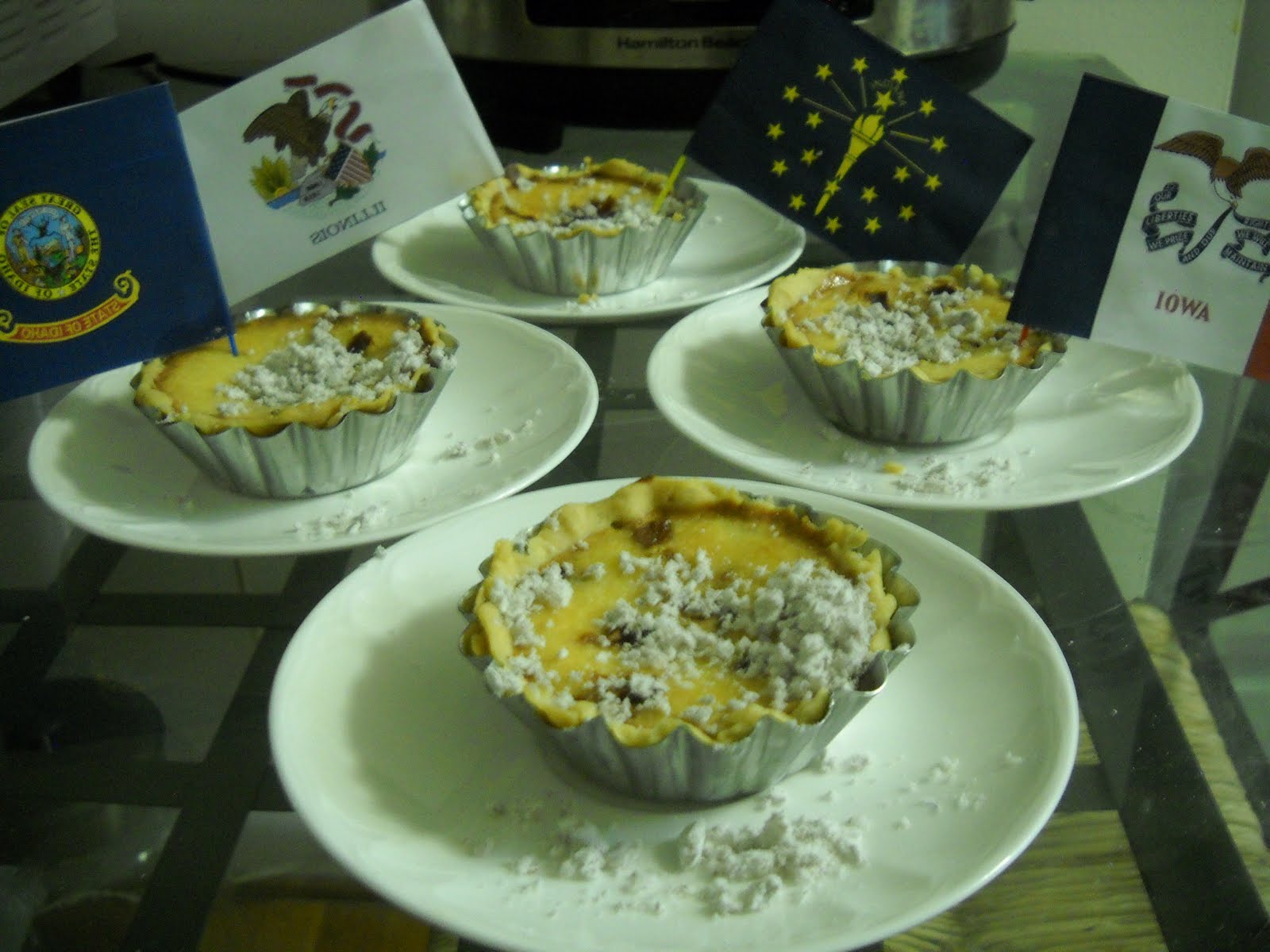

If you want whipped cream as an additional garnish, whip it up and sweeten it, and put it on the side, or top the tart first with the whipped cream and then the nutella powder.

The tarts were not terribly sweet, which was a nice way to let the sweetness of the huckleberry and the nutella come out. I don't know if cooks in the Northwest combine bacon and huckleberry very often, but in this recipe they went together very well. I imagine the same could be said for the closely-related blueberry, but that's for me to try another time.

Thursday, June 02, 2011

Snacking State-by-State: Illinois V - She Fed Me... with Science!

Before I started preparing this final Illinois post, I got what I have to call "Achatz-y". Those of you familiar with the famous molecular gastronome who helms Chicago's Alinea and who recently chronicled his battle with tongue cancer (which could have taken his life, much less his career), will understand what I mean.

Official Name: State of Illinois
State Nicknames: The Prairie State; The Land of Lincoln
Admission to the US: December 3, 1818 (#21)
Capital:
Springfield (6th largest city)
Other Important Cities: Chicago (largest in the state and the Midwest; 3rd largest in the US); Aurora (2nd largest); Rockford (3rd largest)
Region: Midwest, Great Lakes; East North Central (US Census)
RAFT Nations: Cornbread & BBQ, Wild Rice
Bordered by:
Wisconsin (north); Lake Michigan (northeast); Indiana (east); Kentucky (southeast & south); Missouri (southwest); Iowa (northwest)
Official State Foods and Edible Things: popcorn (snack food); GoldRush apple (fruit); white-tailed deer (animal)
Some Famous & Typical Foods: typical Midwestern foods, especially corn; Native American and pioneer foods; state-specific foods (horseshoe sandwich, shrimp de Jonghe, Chicago dog, Italian beef); also note: deep-dish pizza and hot dogs were first made popular in Illinois

Grant Achatz is one of the leading lights in the whole "molecular gastronomy" movement. Molecular gastronomy is the culinary exploration of the chemical and physical properties of food. It is not something I know much about or have ever been very interested in investigating. Now that I know a bit more about it, I am quite intrigued.

Molecular gastronomy forces you to think of your pantry as a chemical lab of sorts. In his "Postmodern Pantry" section of Achatz's massive Alinea cookbook, Mark McClusky sums up the molecular gastronome's attitude towards food and ingredients:

Go into your kitchen and open your pantry. You're staring at a lab's worth of chemicals. Baking soda? That's calcium bicarbonate if you want to be technical. Cream of tartar? More accurately, it's potassium hydrogen tartrate... Cooking is chemistry. Even the techniques are the same: heating, cooling, purification, dilution, distillation, fermentation. The difference between a saucier and an Erlenmeyer flask...is one of familiarity. [McClusky, in Achatz 2008:16]
Achatz's cookbook is a good go-to source for all the typical ingredients and supplies one would ever need to do molecular gastronomy at home. And it is possible to do this stuff at home, as many websites and online communities, such as the Molecular Gastronomy Network and MolecularRecipes.com attest. But I am still a molecular gastro-noob, so instead of trying spinach foam, melon-cantaloupe caviar or right or anti-grilled anything right off the bat, I thought I would try something a bit more reachable for me, simply turning a liquid fat into a powder, using tapioca maltodextrin.

The recipe: Olive Oil Powder (Alinea-Style)

Tapioca maltodextrin is a modified food starch used by companies to put fats into powder form, but is used by molecular gastronomes to turn oils, butters, and such into powder (this video from Gourmet Magazine's Will Goldfarb shows how to make a nutella powder). There are a few purveyors of this fascinating ingredient, all of them online. You can buy it from a few places online, where it'll run anywhere from $9 to $23 for a pound, or do what I did and order a free sample from the National Starch website.

Unbeknownst to me, barely a month ago Anthony Cipolone of the blog Mr. Onion's Neighborhood did the exact same thing I am about to do, using the exact same recipe in the exact same ingredients. He loves this stuff, and I hope my olive oil powder turns out like his. Science, right?


You need three ingredients and a few supplies:

* tapioca maltodextrin (see free sample note above)
* olive oil (had on hand)
* salt (same)

Not only that, but you will need a digital scale that can display measurements in grams and/or fractions of ounces. The cheapest ones run around $30 at Bed, Bath and Beyond. You don't need a fancy one.


Measure out the ingredients: first the olive oil,


then the tapioca maltodextrin, which will fly all over the place if you're not careful (um, ahem),


and the salt.


Whisk it all together. At first I used my hand whisk but it all just gooped up inside the whisk, so I switched to a fork and then ultimately the whisk attachment on my hand blender, which worked the best.

Nope, the fork just isn't doin' it for me.

Okay, the whisk attachment. That's better.

Because I am clumsy, I had to add a little more tapioca maltodextrin at a time - yes I eyeballed it, which is not exactly scientific I admit.

In the end I came up with something very crumbly and pasty, and not in any way wet.


I did not exactly get a powdery texture, but after pushing it through a strainer (or by its more French-sounding name, a tamis) I got a more powdery substance.


When he did this, Mr. Onion literally said "Strangely enough, I ended up with what looked like grated cheese." I hear ya, brother. I got the same thing. But the taste on the tongue was clearly olive oil. The texture was very slightly grainy at first, turning to silken. It was a most strange experiment, to be sure.


And so my massive sojourn into Illinois is done, from hearty farm food to heartier sandwiches, to Polish and Italian food, to the height of food science, Illinois truly has it all. So this begs my next question: what about Indiana, which is right next door?

Sources:


Achatz, Grant, Alinea. Ten Speed Press: Berkeley, CA, 2008.

Cipolone, Anthony
. "Tapioca Maltodextrin: Sprinkle on the Fat". Mr. Onion's Neighborhood, published May 5, 2011.

McClusky, Mark, "Postmodern Pantry". In Alinea, by Grant Achatz.

Some information also obtained from Wikipedia's "Illinois" page and other pages, and the Food Timeline State Foods link to "Illinois".