
Showing posts with label Texas and Tex-Mex cuisine. Show all posts

Sunday, January 20, 2013

State-by-State Redux: IV of X - The Mountain West and Southwest Revisited - Bison, Fajita-Style

We start forging our way eastward now, hitting that Continental Divide.  For this post I wanted to figure out how to meld the tastes of the Mountain States with those of the Southwest.

Snacking State-by-State Redux IV of X: The Mountain West and Southwestern States

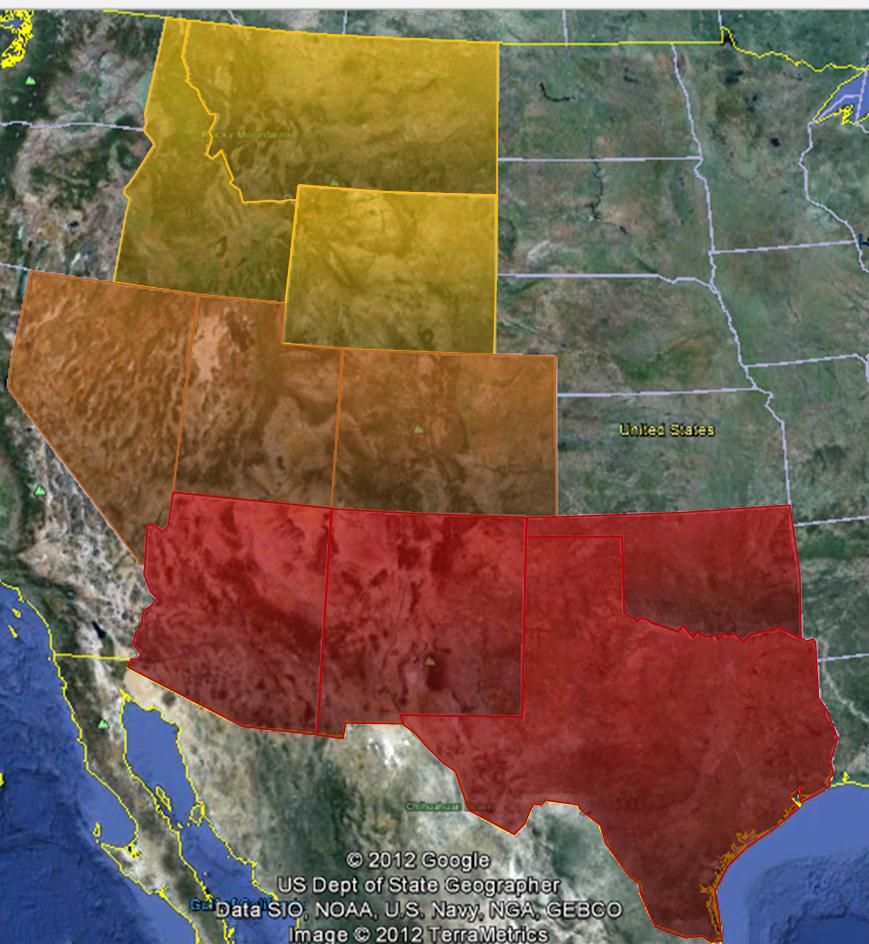
What are the Mountain (or Interior) West States?: Colorado, Idaho, Montana, Nevada, Utah, Wyoming; sometimes Arizona, New Mexico
What are the Southwestern States?: Arizona, New Mexico, Texas; sometimes California, Colorado, Nevada, Oklahoma, Utah
Important Cities: Albuquerque, Austin, Billings, Boise, Cheyenne, Dallas, Denver, Houston, Las Vegas, Oklahoma City, Phoenix, Salt Lake City, San Antonio, Santa Fe, Tucson, Tulsa
Regions and Subregions: Big Sky Country; Southwest; Rockies; Mountain, West South Central (US Census)
RAFT Nations: Bison (southern Alberta & Saskatchewan, eastern Montana and Colorado, parts of eastern Wyoming and New Mexico, Oklahoma, interior Texas). Chile Pepper (southern and central Arizona, southern New Mexico, western Texas, Sonora, Chihuahua, western Coahuila), Corn Bread & BBQ (southeastern Oklahoma, northeastern Texas), Gumbo (coastal Texas) Pinyon Nut (southern Idaho, Nevada, western Montana, Wyoming, Colorado, Utah, northern Arizona, northern New Mexico), Salmon (Idaho)
Foods the Region is Best Known For: frontier foods (beans, prairie breads, etc), Native American foods (pine nuts: Great Basin; wojapi, pemmican, wahuwapa wasna, etc: Big Sky and Great Plains; Three Sisters: Southwest); Southwestern (Tex-Mex in eastern Texas & Oklahoma, New Mexican in New Mexico, Arizona, Colorado, Nevada, Utah); bison, beef; potatoes (Idaho); huckleberries, blackberries (Northwest)
- - - - -

To fuse the Northwest with the Southwest, my mind went straight to fajitas.  I'm not sure why that was the first thing to pop up in my head, but it was, and it never left.  Sufficiently Southwestern and Mexican as it is, I sought to fuse that with bison, an animal you're quite likely to see in the Rockies and the Plains but not really in much of the Southwest.  The end result: bison fajitas, paired not with red bell peppers, mind you, but with some of the delicious Hatch chiles I bought and froze when still in season.  And what fajita wouldn't go with guacamole?

The Recipe: Bison and Hatch Chile Fajitas with Guacamole

While I mostly winged this recipe, I did get one part from an outside source: the (seemingly no longer updated) 10 Cent Diet blog, where a recipe for bison fajitas was posted in 2009.  The only part I used was the blogger's marinade for her bison strip loin steak (or in my case, flank steak, which several other recipes suggested). Further credit where it is due: the 10 Cent Diet blogger adapted her recipe from one she found on Epicurious.  And the citations go on.

For this recipe you will need the following:


* bison steak, in this case flank steak ($18/lb at Gunpowder Bison!  I justified it by saying that I don't buy this very often - I don't; I just don't have that kind of money.  If you have no locally available source of bison steaks, since most supermarkets don't carry bison and the ones that do pretty much only have it ground, get beef steak instead)

For the bison marinade, you need:
* garlic (I have both the cloves and garlic paste pictured.  I found it easier to just use the paste)
* cumin (had it - make sure you grind it up)
* salt (had it)
* lime juice (three limes for $1.50)
* olive oil (had it)

To assemble the fajitas, you will also need:

* Hatch chiles (if you can't find any or didn't get them when in stores - truly one of the few vegetables to appear in the supermarket "in season only" these days - just go ahead and use bell peppers, which won't have that Hatch chile flavor or heat.  Anaheims and poblanos will, however)
* onion (a few dimes for one)
* guacamole (I whipped up one from an avocado I bought, adding to that garlic, onion, tomato, jalapeño and leftover cilantro);
* And of course, large flour tortillas (not pictured.  Typically, I don't like the flour ones, much preferring the flavor and texture of the corn tortillas, but for a fajita you really need a large flour tortilla.  I bought the low carb whole wheat ones for about $3 at Harris Teeter)


Juice the limes - this will yield you about a little more than 1/4 cup.


Mix the lime juice with the rest of the fajita marinade ingredients in a large zip locked bag.


Put in the bison and let it marinade for about a day in the fridge.


The next day, you will want to fry up your bison - this flank steak took a total of about 15 minutes, with me constantly turning it over every few.


Lookin' nice, there...


Once out of the pan, put the bison on a plate and tent it with aluminum foil.


Next, strip the Hatch chile skins off, and de-seed them (I roasted them before freezing.  If roasted before freezing, the skins really come off like magic once you thaw them)


Pan fry the Hatch chiles with the onion.  They won't be crispy, since they are thawed.  Bell peppers will more likely keep their crunch though.


While that is cooking, throw together the guacamole.  I like mine chunkier like you find farther south in Mexico, not the thinner northern kind.


You are just about ready to put together some fajitas.  Heat up your flour tortillas.


Slice the flank steak thinly along the grain.


And throw a few pieces of bison in your tortilla with some chiles, onion and guacamole.


I didn't bring mine out in a fancy fajita pan, and mine were not sizzling at the table.  Still, I had some juicy, wonderful bison piled on top with spicy Hatch chiles and their distinctive vegetal taste.  I don't know if I can ever eat a fajita with just bell peppers again.  It is a filling meal and I only could eat about two at one sitting.  

- - - - -

We keep wending our way Back East, as we hit the prairies and the Great Lakes to sample hearty Midwestern food in this series just one more time.

Sources:

The 10 Cent Diet (blog).  "Bison Fajitas".  Posted January 27, 2009.

Some information also obtained from Wikipedia and from the Food Timeline State Foods webpage.

Friday, September 21, 2012

Snacking State-by-State: Texas III - Tex-Mex the meatless way (or "Yes, Texas, you've got a case of Vegans")


Back when I looked at New Mexico (and to some extent Arizona), I noted that not all Southwestern food was alike.  Instead, there are two distinct varieties, New Mexican and Tex-Mex.  Apparently, much of the Southwest sides with the "New Mexican" version of Southwestern cuisine.  But when much of the East Coast thinks about Southwestern food, it thinks about the variety from Texas.


Official Name: State of Texas
State Nickname: The Lone Star State, The Republic of Texas
Admission to the US: December 29, 1845 (#28)
Capital: Austin (4th largest)
Other Important Cities: Houston (largest), San Antonio (2nd largest), Dallas (3rd largest), El Paso (6th largest),
Region: South, Southwest; West South Central (US Census)
RAFT Nations: Cornbread & BBQ; Chile Pepper; Gumbo; Bison
Bordered by: Oklahoma (north), Arkansas (northeast), Louisiana (east), Gulf of Mexico (southeast), Tamaulipas, Nuevo León & Coahuila (Mexico) and the Río Grande (south), Chihuahua (Mexico) (southwest), New Mexico (west)
Official State Foods and Edible Things: cast iron dutch oven (cooking implement - not edible, of course, but used for cooking), chili (dish), chiltepín (native pepper), Guadalupe bass (fish), jalapeño (pepper), longhorn (large mammal), pan de campo (bread), pecan (tree and health nut), prickly pear cactus (plant - for the pads and the fruit), sopaipilla and strudel (pastries), sweet onion (vegetable), Texas purple sage (native shrub), Texas red grapefruit (fruit). tortilla chips and salsa (snack)
Some Famous and Typical Foods: Where to begin?  Texas-style barbecue (specifically beef and beef brisket), Texas chili, chicken fried steak, Mexican (specifically Northern Mexican) foods, Tex-Mex foods (including migas, chile con carne and sopaipilla)


So what is the difference?  Houston Chronicle blogger Patrise Shuttlesworth [2012] lays it out for us.  For starters, she notes that it isn't so much the ingredients - though the fabled New Mexico chile is a key component - as it is the cooking techniques that define New Mexican cuisine: roasted chiles and veggies, little frying, little meat and no cumin.  Tex-Mex, on the other hand, is noted for bigger portions, cheeses, cream gravies, combo plates and, yes, cumin:
Tex Mex tends to be comprised of a specific group of ingredients with a small allowance for regional variance. The ingredients you can count on are: large amounts of sour cream; copious amounts of cheese and meat; Jalapeños; Cumin/Comino; even olives; very large portions; very heavy dishes laden with chili con carne
As the unfortunate saying goes - "Everything is bigger in Texas!" That doesn't just refer to our hair. Our portion sizes, our plate sizes, our allotment of table tortilla chips and sadly, our people are bigger. Mexican food came from a culture of "only eat what's available because you grew or raised it." They did not know the Big Tex Taco plate or the Cowboy Bistek. We would be better off if we had never met them either. [Shuttlesworth 2012]
Sound familiar?  Yep, pretty much any Southwestern food we find on the East Coast sounds like this.  Delicious, but it makes you big.

Mind you, vegan cooking is not necessarily low fat cooking (try a good vegan mac & cheese, for example).  But it is meat and animal product free.  This is practically the opposite of Tex-Mex, and of Texan cooking in general.  But head to Austin and you can easily find vegan foods at the world's oldest and (to may eyes at least) Whole Foods.  I stopped in here twice on my visit to Austin earlier this year, and was blown away by the sheer size of the store and its offerings.  I guess everything is bigger in Texas.

Hopefully you can see how I'm tying Texas and veganism together.  But Tex-Mex?  Try out Austin Whole Foods' breakfast bar and you will find a healthy selection of vegan and vegetarian as well as meaty offerings.  One of my favorite ones was a vegan version of the popular Texan dish migas - a simple Southwestern dish composed of eggs scrambled with scraps of corn tortillas.  Migas is a counterpart to the Ashkenazi Jewish matzah brei (replace tortillas with matzah) or the hearty Midwestern hoppel poppel (replace tortillas with potatoes and salami).  But to veganize it you have to cut out the scrambled eggs. You could go the Whole Foods route and use egg substitute, or use what more innovative vegan chefs prefer: tofu, extra firm in this case.  This recipe from the Dallas Vegan blog [2009] is the one I used.

The Recipe: Vegan Migas

For this simple vegan version of migas you will only need the following:


* extra firm tofu (Dallas Vegan suggests Mori-Nu brand tofu.  I got the only "extra firm tofu" I could find at H-Mart for about $3)
* turmeric (this gives the tofu that scrambled egg-like color.  I had it on hand)
* corn tortillas (These were in the refrigerator case in H-Mart for about $2.50.  Please use corn and not flour tortillas, though I guess this would work with flour ones)
* olive oil (had it)
* cumin (had it too)
* garlic (had this too)
* salt and pepper (yup)


Start by cutting your tortillas into squares.


Toast the tortillas squares in a skillet with some olive oil.  When slightly crispy, remove and set aside.


Take your tofu and turmeric and add them to the olive oil. Mush up the tofu with a spoon.


Add your other spices - cumin, garlic, salt and pepper.


Stir for a few minutes until it is warm and looks like scrambled eggs.


Add your tortilla squares and cook for a few minutes more.


I don't typically eat vegan.  Plus, I have eggs.  But this is a good and I daresay hearty way to use up some tofu (again, extra firm.  Don't use the soft stuff).  I also have to admit that, while it didn't exactly taste like eggs, I didn't really notice that it didn't.  Add a few sprigs of cilantro on the side and maybe some tomatoes and you have a mighty fine breakfast dish.

Sources:

DallasVegan.com.  "Simple Vegan Migas…Brownsville Style".  DallasVegan.com, posted January 19, 2009.  Copyright 2010 DallasVegan.com.  All rights reserved.

Dr. Dan (blogger).  "Spicy 3 Chilies Texas Chili a la Crock Pot".  101 Cooking for Two, posted February 25, 2012.

Fain, Lisa.  "My Oven-Baked Brisket".  Homesick Texan, posted December 16, 2008.  Copyright Homesick Texan.  All rights reserved. 

Goldwyn, Craig "Meathead".  "Barbecue Beef Brisket Texas Style".  Amazing Ribs updated March 2, 2012.  Copyright Amazing Ribs.  All rights reserved.

Guía de Tacos (Guiadetacos.com).  "Enchiladas norteñas".  Date unknown.

Johnson Miller, Ruthie.  "Banh mi, oh my! The top five Vietnamese sandwich shops in Houston".  Culture Map Houston, posted February 26, 2011.  Copyright 2009-2012 Culture Map, LLC.  All rights reserved.

Nguyen, Andrea.  "Daikon and Carrot Pickle Recipe (Do Chua)".  Viet World Kitchen, posted May 17, 2009.  Copyright 2002-2012 Andrea Nguyen.  All rights reserved.

Nguyen, Andrea.  "Master Banh Mi Sandwich Recipe".  Viet World Kitchen, posted June 17, 2009.  Copyright 2002-2012 Andrea Nguyen.  All rights reserved.

Shuttlesworth, Patrise.  "Tex-Mex vs. New Mex: Not Just About Jalapeños or Green Chiles".  On the Road, a Houston Press Blog, posted March 26, 2012.  Copyright Houston Press.  All rights reserved.

Sliter Satterwhite, Shannon. "Make a Batch of Texas Chili".  Southern Living Magazine, October 2005.

von der Mehden, Fred R. "Vietnamese".  Handbook of Texas Online.  Date unknown.  Published by the Texas State Historical Association.  Copyright 2012 Texas State Historical Association, published by the Texas State Historical Association, and distributed in partnership with the University of North Texas Sponsors.  All rights reserved.

Some information also obtained from Wikipedia's "Texas" page and other pages, and the Food Timeline State Foods link to "Texas".

Tuesday, September 18, 2012

Snacking State-by-State: Texas II - Beans? We don't need no stinkin' beans!


Texas chili is quite distinct from other chilis in that it is missing one big thing: beans.  Ask any Texan if they put beans in their chili, and they might shake their heads or just laugh.  So my question: if you're a vegetarian in Texas, do you just not eat chili at all?


Official Name: State of Texas
State Nickname: The Lone Star State, The Republic of Texas
Admission to the US: December 29, 1845 (#28)
Capital: Austin (4th largest)
Other Important Cities: Houston (largest), San Antonio (2nd largest), Dallas (3rd largest), El Paso (6th largest),
Region: South, Southwest; West South Central (US Census)
RAFT Nations: Cornbread & BBQ; Chile Pepper; Gumbo; Bison
Bordered by: Oklahoma (north), Arkansas (northeast), Louisiana (east), Gulf of Mexico (southeast), Tamaulipas, Nuevo León & Coahuila (Mexico) and the Río Grande (south), Chihuahua (Mexico) (southwest), New Mexico (west)
Official State Foods and Edible Things: cast iron dutch oven (cooking implement - not edible, of course, but used for cooking), chili (dish), chiltepín (native pepper), Guadalupe bass (fish), jalapeño (pepper), longhorn (large mammal), pan de campo (bread), pecan (tree and health nut), prickly pear cactus (plant - for the pads and the fruit), sopaipilla and strudel (pastries), sweet onion (vegetable), Texas purple sage (native shrub), Texas red grapefruit (fruit). tortilla chips and salsa (snack)
Some Famous and Typical Foods: Where to begin?  Texas-style barbecue (specifically beef and beef brisket), Texas chili, chicken fried steak, Mexican (specifically Northern Mexican) foods, Tex-Mex foods (including migas, chile con carne and sopaipilla)

The one common thread running through all Texas chilis is the lack of beans.  Note: you do not put beans in a Texas chili.  If you do, it ain't Texas chili.  Oh sure, it may be some kind of chili (check out Cincinnati's chili, for example, which I made a while back when I looked at Ohio.  Sure the beans aren't cooked into the chili, but it winds up on the plate eventually).  Non-Texan Shannon Sliter Satterwhite writes for Southern Living Magazine [2005] about how she grew up yearning for a delicious chili that just didn't have so many beans, and found it in Texas with its "well-seasoned stew with chunks of tender beef in every bite - a style of chili that Texans have been making for generations" [Sliter Satterwhite 2005].  She further talks about the history of Texas chili, which has its origins in northern Mexico's chile con carne:
The granddaddy of this Tex-Mex dish, chili con carne, is thought to have originated in the 1800s along the Texas cattle trails. Range cooks would commonly prepare a pot of fresh beef and wild-grown seasonings for the cowhands. Before long, the popularity of this spicy stew spread like cheese on a hot burrito throughout the trail towns. It's even said that Frank and Jesse James would stop to eat a bowl before pulling their next bank job.  [Sliter Satterwhite 2005]
I also opted for chunks of beef over ground beef, which I thought would turn out much nicer.  The recipe I used comes to us from "Dr. Dan" who writes the 101 Cooking for Two blog.  As he notes, this is "a spiced up version" [Dan 2012] of his previous Texas chili - as he puts it, a 7 out of 10 on the spiciness scale.  It was a good level of spicy for me.

The Recipe: Texas Chili

Dr. Dan's Texas chili consists of the following:


* chuck roast (I bought this on sale at Wegman's for about $4 per lb, and cut it up myself)
* canned tomatoes (the recipe specifically calls for the canned stuff, which is probably better than most of the tomatoes you'll find in the produce department anyway)
* two each serrano, poblano & jalapeño chile peppers (Dr. Dan calls for three different types of chile which will give this chili a nice heat and complexity.  None of these should cost more than a few dimes at most)
* beef broth (about $1.49 a can)
* onion (picked one up at Wegman's cheap)
* garlic (had it)
* chili powder (of course, just as Texas chili must not have beans, it probably must have chili powder.  I'm not just about out of the stuff)
* cumin, oregano, salt & pepper (had it all)
I also added hot sauce, since I wanted a hotter chili than Dr. Dan was prescribing.


Just for the hell of it, I roasted the poblanos.  Yes, I have to clean my oven top.


Chop (and if you don't like them, seed) your chiles.


The finer you chop those chiles, onions and garlic cloves the better, I think.


Probably best not to chop the beef too fine though.  Just chunk it.


Mix your meat, chiles and vegetables together in a crock pot.


Add the broth...


...and the spices.


Yes, I added extra heat.


Turn on the slow cooker and let your chili slow cook on low for eight hours.


My chili turned out a little on the liquidy side, which wasn't much of a problem.  I merely strained out the liquid from the chili.  It was a chili whose beef fell apart in my mouth because it was so tender and spicy hot.  And true, the different chiles give a depth to this chili that make this one I will have to come back for over again.

Sources:

DallasVegan.com.  "Simple Vegan Migas…Brownsville Style".  DallasVegan.com, posted January 19, 2009.  Copyright 2010 DallasVegan.com.  All rights reserved.

Dr. Dan (blogger).  "Spicy 3 Chilies Texas Chili a la Crock Pot".  101 Cooking for Two, posted February 25, 2012.

Fain, Lisa.  "My Oven-Baked Brisket".  Homesick Texan, posted December 16, 2008.  Copyright Homesick Texan.  All rights reserved. 

Goldwyn, Craig "Meathead".  "Barbecue Beef Brisket Texas Style".  Amazing Ribs updated March 2, 2012.  Copyright Amazing Ribs.  All rights reserved.

Guía de Tacos (Guiadetacos.com).  "Enchiladas norteñas".  Date unknown.

Johnson Miller, Ruthie.  "Banh mi, oh my! The top five Vietnamese sandwich shops in Houston".  Culture Map Houston, posted February 26, 2011.  Copyright 2009-2012 Culture Map, LLC.  All rights reserved.

Nguyen, Andrea.  "Daikon and Carrot Pickle Recipe (Do Chua)".  Viet World Kitchen, posted May 17, 2009.  Copyright 2002-2012 Andrea Nguyen.  All rights reserved.

Nguyen, Andrea.  "Master Banh Mi Sandwich Recipe".  Viet World Kitchen, posted June 17, 2009.  Copyright 2002-2012 Andrea Nguyen.  All rights reserved.

Shuttlesworth, Patrise.  "Tex-Mex vs. New Mex: Not Just About Jalapeños or Green Chiles".  On the Road, a Houston Press Blog, posted March 26, 2012.  Copyright Houston Press.  All rights reserved.

Sliter Satterwhite, Shannon. "Make a Batch of Texas Chili".  Southern Living Magazine, October 2005.

von der Mehden, Fred R. "Vietnamese".  Handbook of Texas Online.  Date unknown.  Published by the Texas State Historical Association.  Copyright 2012 Texas State Historical Association, published by the Texas State Historical Association, and distributed in partnership with the University of North Texas Sponsors.  All rights reserved.

Some information also obtained from Wikipedia's "Texas" page and other pages, and the Food Timeline State Foods link to "Texas".

Sunday, September 16, 2012

Snacking State-by-State: Texas I - The Land of Beef and BBQ

The next state on my list is the biggest in the South and Southwest.  Like other large states, Texas has a lot going on foodwise, from barbecue to chili, Mex to Tex-Mex, chiles, phởs and chicken-fried steaks - and so much more.

Official Name: State of Texas
State Nickname: The Lone Star State, The Republic of Texas
Admission to the US: December 29, 1845 (#28)
Capital: Austin (4th largest)
Other Important Cities: Houston (largest), San Antonio (2nd largest), Dallas (3rd largest), El Paso (6th largest),
Region: South, Southwest; West South Central (US Census)
RAFT Nations: Cornbread & BBQ; Chile Pepper; Gumbo; Bison
Bordered by: Oklahoma (north), Arkansas (northeast), Louisiana (east), Gulf of Mexico (southeast), Tamaulipas, Nuevo León & Coahuila (Mexico) and the Río Grande (south), Chihuahua (Mexico) (southwest), New Mexico (west)
Official State Foods and Edible Things: cast iron dutch oven (cooking implement - not edible, of course, but used for cooking), chili (dish), chiltepín (native pepper), Guadalupe bass (fish), jalapeño (pepper), longhorn (large mammal), pan de campo (bread), pecan (tree and health nut), prickly pear cactus (plant - for the pads and the fruit), sopaipilla and strudel (pastries), sweet onion (vegetable), Texas purple sage (native shrub), Texas red grapefruit (fruit). tortilla chips and salsa (snack)
Some Famous and Typical Foods: Where to begin?  Texas-style barbecue (specifically beef and beef brisket), Texas chili, chicken fried steak, Mexican (specifically Northern Mexican) foods, Tex-Mex foods (including migas, chile con carne and sopaipilla)

It's not easy to explain the foods of Texas, because there is just so much of it.  But apart from many typical foods of the South, the Gulf Coast (Houston has its gumbos, for example) and the Southwest, the Lone Star State burns bright with so many of its own.

* beef - Texas is cattle country, and when many of us non-Texans think about the state, the first thing we think of is beef.  Many of the state's most famous dishes are beef based: Texas chili, Texas beef brisket (see below), chicken-fried steak, barbacoa and carne asada (Mexican foods that are also seen often in Texas.  Also note: northeastern Mexico is also carne de res country)

* Tex Mex cuisine - When most Americans think of Mexican food, they're really thinking of this: Texas' own take on the Southwest.  As I'll explore in a following post, "Tex Mex" is not exactly the same as "Mexican", since it is heavier on the cumin, cheese and meat.  Fajitas, migas, sopaipillas and nachos some of the classic Tex-Mex dishes.

* northern Mexican cuisine - Tex Mex has its basis in the foods of northeastern Mexico, and four states border Texas to the south: Chihuahua, Coahuila, Nuevo León and Tamaulipas.  The chile con carne, barbacoa, carne asada, enchiladas and even to some extent the nachos and migas you find in Tex Mex food all have their origins in this part of Mexico.

* chili - Texas chili is its own special chili.  As we will see in a future post, the one most important thing about Texas chili: it is all meat and never, ever contains beans.

* pan de campo is the simple baking powder "camp bread" that is the official state bread of Texas (here's one recipe from the Travel Magazine of Texas)

* barbecue - This is probably what most of us think of when we think of Texas, a state with its own idea of its barbecue, and more importantly, other states' barbecues.

As with other barbecue states, Texas has a few regional styles.  According to Wikipedia (if you can trust it), East, Central and West Texas all have their own styles of barbecue.  The Texas 'cue I am most familiar (least unfamiliar) with is that of Central Texas, which I indulged in during my recent trip to Austin.  And it's the one that the Meathead himself walks us through, step by step.  While Central Texans barbecue just about any meat - beef, pork, chicken, turkey, wild boar, sausage - their favorite is beef brisket.  As Meathead puts it, "Brisket is the national food of the Republic of Texas" [Goldwyn 2012].  Beyond that, there is no agreement in Texas on what to do with brisket.  Typically, there is some sort of dry rub over a high-quality cut of meat, from "...the chest area of the steer between the forelegs" [Goldwyn 2012].  The steer has two, and they can be tough.  So you need to slow cook it for a long while.

Goldwyn's recipe needs to be done both outside and inside.  I don't have that luxury, so as with my attempts at Kansas City, Memphis and both North Carolina barbecue recipes east and west, I had to find a way to prepare Texas brisket completely indoors (yes, blasphemy, I know).  For the actual recipe, I turned to Lisa Fain's Homesick Texan website [2008].  She had to figure out how to prepare brisket in the oven in her smallish New York City apartment, and she came up with a way to do it using liquid smoke and Worcestershire sauce.  In fact, she notes that in all the variations she tried, Worcestershire was the one common factor.
I have received countless e-mails from y’all, my dear readers, sharing your brisket recipes. And when I was experimenting with how I wanted to make my brisket, I ended up trying quite a few. I think the common theme in all is Worcestershire sauce, along with a generous dose of liquid smoke. The liquid smoke won’t fool anyone, but I like the layer of flavor it adds. [Fain 2008]
Since I didn't want to leave my oven on for five hours, I adapted her delicious brisket for the slow-cooker-as-smoker method I used for the North Carolina barbecue posts.  I was similarly pleased with the results.

The Recipe: Texas Beef Brisket (smoked in the oven)

To do Fain's brisket in the slow cooker, you will need:


* beef brisket (a 3.5 pound one in this case.  While Fain notes that it's difficult to find anything bigger than a measly 1 lb brisket in New York, in Baltimore I couldn't find anything smaller than a 7 lb one at Wegman's.  So again, the nice people at Wegman's cut it in half for me and repackaged the half I didn't want.  It was about $4 per lb)
* Worcestershire sauce (the common thread in all of Fain's brisket recipes.  I had this on hand)
* soy sauce (had it too)
* liquid smoke (I still had some left over from the Kansas City barbecue sauce.  Since I actually smoked this brisket, I used less than Fain called for - 1/4 cup plus up to an extra 1/4 cup.  In the end, I added about 3/16 cup - half way between 1/4 and 1/8 cup - to the slow cooker.)
* apple cider vinegar (had it, and now I need some more)
* black coffee (I'm not a coffee drinker, so I stopped at Starbucks for a small black coffee for about $2)
* jalapeños (I had used all my jalapeños for my other Texas recipes, coming soon, except for one.  I did have a piddly little can of chopped serrano chiles.  It just wasn't the same, even in a pinch)
* onion (had them)
* garlic (same)
* cayenne pepper, salt & pepper (and same)

Remember, we are smoking this brisket in the slow cooker, so I also gathered:

* parchment paper (to make a satchel that you will place at the bottom of the slow cooker pot, filled with...)
* hickory chips (which you must soak at least an hour.  I had these from my attempts at North Carolina barbecue)


Soak those hickory chips.


While you do this, create your rub, mixing the garlic and all the dry ingredients together.


After about an hour, drain the chips and make a satchel with the parchment paper, poking holes all over the side facing up to allow any steam to escape into the slow cooker.


From here I added Fain's ingredients to the slow cooker.  Slice the onion and put the rings at the bottom, around the satchel of hickory chips.


Again, I used a bit less of the liquid smoke than the recipe calls for, since I was actually smoking the brisket.


Dry rub the brisket, and place it fat side up in the slow cooker, on top of the satchel.


Cover with your chiles.


Fain's recipe has you baking it in the oven for about five hours.  I slow cooked it for 7 1/2 hours.


And when it was done, I got this beautiful brisket.  Save the liquid, which Fain points out "is a fine, fine topping" [2008].


Slice the fat off the top and discard.


And slice against the grain.


When I visited Austin, all the brisket that I was served was served up three or four slices worth with plain white bread, onion slices and a small side of barbecue sauce - in this case Austin's own Stubb's brand (pickle slices were not uncommon).  It is some delicious beef brisket, juicy and not dry at all, with a nice spiciness and subtle but definite hickory smoke flavor.  The next time I will experiment by leaving out the liquid smoke altogether, to see how it turns out.  It will still be lovely.

Sources:

DallasVegan.com.  "Simple Vegan Migas…Brownsville Style".  DallasVegan.com, posted January 19, 2009.  Copyright 2010 DallasVegan.com.  All rights reserved.

Dr. Dan (blogger).  "Spicy 3 Chilies Texas Chili a la Crock Pot".  101 Cooking for Two, posted February 25, 2012.

Fain, Lisa.  "My Oven-Baked Brisket".  Homesick Texan, posted December 16, 2008.  Copyright Homesick Texan.  All rights reserved. 

Goldwyn, Craig "Meathead".  "Barbecue Beef Brisket Texas Style".  Amazing Ribs updated March 2, 2012.  Copyright Amazing Ribs.  All rights reserved.

Guía de Tacos (Guiadetacos.com).  "Enchiladas norteñas".  Date unknown.

Johnson Miller, Ruthie.  "Banh mi, oh my! The top five Vietnamese sandwich shops in Houston".  Culture Map Houston, posted February 26, 2011.  Copyright 2009-2012 Culture Map, LLC.  All rights reserved.

Nguyen, Andrea.  "Daikon and Carrot Pickle Recipe (Do Chua)".  Viet World Kitchen, posted May 17, 2009.  Copyright 2002-2012 Andrea Nguyen.  All rights reserved.

Nguyen, Andrea.  "Master Banh Mi Sandwich Recipe".  Viet World Kitchen, posted June 17, 2009.  Copyright 2002-2012 Andrea Nguyen.  All rights reserved.

Shuttlesworth, Patrise.  "Tex-Mex vs. New Mex: Not Just About Jalapeños or Green Chiles".  On the Road, a Houston Press Blog, posted March 26, 2012.  Copyright Houston Press.  All rights reserved.

Sliter Satterwhite, Shannon. "Make a Batch of Texas Chili".  Southern Living Magazine, October 2005.

von der Mehden, Fred R. "Vietnamese".  Handbook of Texas Online.  Date unknown.  Published by the Texas State Historical Association.  Copyright 2012 Texas State Historical Association, published by the Texas State Historical Association, and distributed in partnership with the University of North Texas Sponsors.  All rights reserved.

Some information also obtained from Wikipedia's "Texas" page and other pages, and the Food Timeline State Foods link to "Texas".