
We start forging our way eastward now, hitting that Continental Divide. For this post I wanted to figure out how to meld the tastes of the Mountain States with those of the Southwest.
Snacking State-by-State Redux IV of X: The Mountain West and Southwestern States
 What are the Mountain (or Interior) West States?: Colorado, Idaho, Montana, Nevada, Utah, Wyoming; sometimes Arizona, New Mexico
What are the Southwestern States?: Arizona, New Mexico, Texas; sometimes California, Colorado, Nevada, Oklahoma, Utah
Important Cities: Albuquerque, Austin, Billings, Boise, Cheyenne, Dallas, Denver, Houston, Las Vegas, Oklahoma City, Phoenix, Salt Lake City, San Antonio, Santa Fe, Tucson, Tulsa
Regions and Subregions: Big Sky Country; Southwest; Rockies; Mountain, West South Central (US Census)
RAFT Nations: Bison (southern Alberta & Saskatchewan, eastern Montana and Colorado, parts of eastern Wyoming and New Mexico, Oklahoma, interior Texas). Chile Pepper (southern and central Arizona, southern New Mexico, western Texas, Sonora, Chihuahua, western Coahuila), Corn Bread & BBQ (southeastern Oklahoma, northeastern Texas), Gumbo (coastal Texas) Pinyon Nut (southern Idaho, Nevada, western Montana, Wyoming, Colorado, Utah, northern Arizona, northern New Mexico), Salmon (Idaho)
Foods the Region is Best Known For: frontier foods (beans, prairie breads, etc), Native American foods (pine nuts: Great Basin; wojapi, pemmican, wahuwapa wasna, etc: Big Sky and Great Plains; Three Sisters: Southwest); Southwestern (Tex-Mex in eastern Texas & Oklahoma, New Mexican in New Mexico, Arizona, Colorado, Nevada, Utah); bison, beef; potatoes (Idaho); huckleberries, blackberries (Northwest)
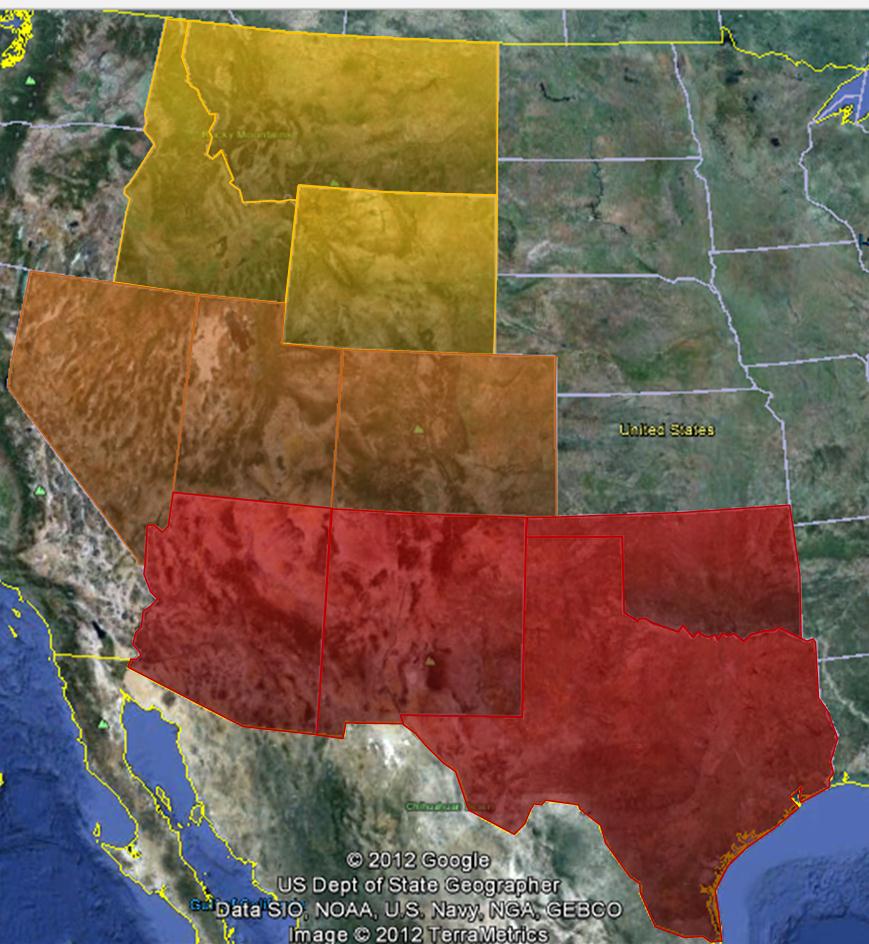
What are the Southwestern States?: Arizona, New Mexico, Texas; sometimes California, Colorado, Nevada, Oklahoma, Utah
Important Cities: Albuquerque, Austin, Billings, Boise, Cheyenne, Dallas, Denver, Houston, Las Vegas, Oklahoma City, Phoenix, Salt Lake City, San Antonio, Santa Fe, Tucson, Tulsa
Regions and Subregions: Big Sky Country; Southwest; Rockies; Mountain, West South Central (US Census)
RAFT Nations: Bison (southern Alberta & Saskatchewan, eastern Montana and Colorado, parts of eastern Wyoming and New Mexico, Oklahoma, interior Texas). Chile Pepper (southern and central Arizona, southern New Mexico, western Texas, Sonora, Chihuahua, western Coahuila), Corn Bread & BBQ (southeastern Oklahoma, northeastern Texas), Gumbo (coastal Texas) Pinyon Nut (southern Idaho, Nevada, western Montana, Wyoming, Colorado, Utah, northern Arizona, northern New Mexico), Salmon (Idaho)
Foods the Region is Best Known For: frontier foods (beans, prairie breads, etc), Native American foods (pine nuts: Great Basin; wojapi, pemmican, wahuwapa wasna, etc: Big Sky and Great Plains; Three Sisters: Southwest); Southwestern (Tex-Mex in eastern Texas & Oklahoma, New Mexican in New Mexico, Arizona, Colorado, Nevada, Utah); bison, beef; potatoes (Idaho); huckleberries, blackberries (Northwest)
- - - - -
To fuse the Northwest with the Southwest, my mind went straight to fajitas. I'm not sure why that was the first thing to pop up in my head, but it was, and it never left. Sufficiently Southwestern and Mexican as it is, I sought to fuse that with bison, an animal you're quite likely to see in the Rockies and the Plains but not really in much of the Southwest. The end result: bison fajitas, paired not with red bell peppers, mind you, but with some of the delicious Hatch chiles I bought and froze when still in season. And what fajita wouldn't go with guacamole?
The Recipe: Bison and Hatch Chile Fajitas with Guacamole
While I mostly winged this recipe, I did get one part from an outside source: the (seemingly no longer updated) 10 Cent Diet blog, where a recipe for bison fajitas was posted in 2009. The only part I used was the blogger's marinade for her bison strip loin steak (or in my case, flank steak, which several other recipes suggested). Further credit where it is due: the 10 Cent Diet blogger adapted her recipe from one she found on Epicurious. And the citations go on.
For this recipe you will need the following:

* bison steak, in this case flank steak ($18/lb at Gunpowder Bison! I justified it by saying that I don't buy this very often - I don't; I just don't have that kind of money. If you have no locally available source of bison steaks, since most supermarkets don't carry bison and the ones that do pretty much only have it ground, get beef steak instead)
For the bison marinade, you need:
* garlic (I have both the cloves and garlic paste pictured. I found it easier to just use the paste)
* cumin (had it - make sure you grind it up)
* salt (had it)
* lime juice (three limes for $1.50)
* olive oil (had it)
To assemble the fajitas, you will also need:
* Hatch chiles (if you can't find any or didn't get them when in stores - truly one of the few vegetables to appear in the supermarket "in season only" these days - just go ahead and use bell peppers, which won't have that Hatch chile flavor or heat. Anaheims and poblanos will, however)
* onion (a few dimes for one)
* guacamole (I whipped up one from an avocado I bought, adding to that garlic, onion, tomato, jalapeño and leftover cilantro);
* And of course, large flour tortillas (not pictured. Typically, I don't like the flour ones, much preferring the flavor and texture of the corn tortillas, but for a fajita you really need a large flour tortilla. I bought the low carb whole wheat ones for about $3 at Harris Teeter)

Juice the limes - this will yield you about a little more than 1/4 cup.

Mix the lime juice with the rest of the fajita marinade ingredients in a large zip locked bag.

Put in the bison and let it marinade for about a day in the fridge.

The next day, you will want to fry up your bison - this flank steak took a total of about 15 minutes, with me constantly turning it over every few.

Lookin' nice, there...

Once out of the pan, put the bison on a plate and tent it with aluminum foil.

Next, strip the Hatch chile skins off, and de-seed them (I roasted them before freezing. If roasted before freezing, the skins really come off like magic once you thaw them)

Pan fry the Hatch chiles with the onion. They won't be crispy, since they are thawed. Bell peppers will more likely keep their crunch though.
.jpg)
While that is cooking, throw together the guacamole. I like mine chunkier like you find farther south in Mexico, not the thinner northern kind.
.jpg)
You are just about ready to put together some fajitas. Heat up your flour tortillas.
.jpg)
Slice the flank steak thinly along the grain.
.jpg)
And throw a few pieces of bison in your tortilla with some chiles, onion and guacamole.
+plated.jpg)
I didn't bring mine out in a fancy fajita pan, and mine were not sizzling at the table. Still, I had some juicy, wonderful bison piled on top with spicy Hatch chiles and their distinctive vegetal taste. I don't know if I can ever eat a fajita with just bell peppers again. It is a filling meal and I only could eat about two at one sitting.
- - - - -
We keep wending our way Back East, as we hit the prairies and the Great Lakes to sample hearty Midwestern food in this series just one more time.
Sources:
The 10 Cent Diet (blog). "Bison Fajitas". Posted January 27, 2009.
Some information also obtained from Wikipedia and from the Food Timeline State Foods webpage.
To fuse the Northwest with the Southwest, my mind went straight to fajitas. I'm not sure why that was the first thing to pop up in my head, but it was, and it never left. Sufficiently Southwestern and Mexican as it is, I sought to fuse that with bison, an animal you're quite likely to see in the Rockies and the Plains but not really in much of the Southwest. The end result: bison fajitas, paired not with red bell peppers, mind you, but with some of the delicious Hatch chiles I bought and froze when still in season. And what fajita wouldn't go with guacamole?
The Recipe: Bison and Hatch Chile Fajitas with Guacamole
While I mostly winged this recipe, I did get one part from an outside source: the (seemingly no longer updated) 10 Cent Diet blog, where a recipe for bison fajitas was posted in 2009. The only part I used was the blogger's marinade for her bison strip loin steak (or in my case, flank steak, which several other recipes suggested). Further credit where it is due: the 10 Cent Diet blogger adapted her recipe from one she found on Epicurious. And the citations go on.
For this recipe you will need the following:

* bison steak, in this case flank steak ($18/lb at Gunpowder Bison! I justified it by saying that I don't buy this very often - I don't; I just don't have that kind of money. If you have no locally available source of bison steaks, since most supermarkets don't carry bison and the ones that do pretty much only have it ground, get beef steak instead)
For the bison marinade, you need:
* garlic (I have both the cloves and garlic paste pictured. I found it easier to just use the paste)
* cumin (had it - make sure you grind it up)
* salt (had it)
* lime juice (three limes for $1.50)
* olive oil (had it)
To assemble the fajitas, you will also need:
* Hatch chiles (if you can't find any or didn't get them when in stores - truly one of the few vegetables to appear in the supermarket "in season only" these days - just go ahead and use bell peppers, which won't have that Hatch chile flavor or heat. Anaheims and poblanos will, however)
* onion (a few dimes for one)
* guacamole (I whipped up one from an avocado I bought, adding to that garlic, onion, tomato, jalapeño and leftover cilantro);
* And of course, large flour tortillas (not pictured. Typically, I don't like the flour ones, much preferring the flavor and texture of the corn tortillas, but for a fajita you really need a large flour tortilla. I bought the low carb whole wheat ones for about $3 at Harris Teeter)

Juice the limes - this will yield you about a little more than 1/4 cup.

Mix the lime juice with the rest of the fajita marinade ingredients in a large zip locked bag.

Put in the bison and let it marinade for about a day in the fridge.

The next day, you will want to fry up your bison - this flank steak took a total of about 15 minutes, with me constantly turning it over every few.

Lookin' nice, there...

Once out of the pan, put the bison on a plate and tent it with aluminum foil.

Next, strip the Hatch chile skins off, and de-seed them (I roasted them before freezing. If roasted before freezing, the skins really come off like magic once you thaw them)

Pan fry the Hatch chiles with the onion. They won't be crispy, since they are thawed. Bell peppers will more likely keep their crunch though.
.jpg)
While that is cooking, throw together the guacamole. I like mine chunkier like you find farther south in Mexico, not the thinner northern kind.
.jpg)
You are just about ready to put together some fajitas. Heat up your flour tortillas.
.jpg)
Slice the flank steak thinly along the grain.
.jpg)
And throw a few pieces of bison in your tortilla with some chiles, onion and guacamole.
+plated.jpg)
I didn't bring mine out in a fancy fajita pan, and mine were not sizzling at the table. Still, I had some juicy, wonderful bison piled on top with spicy Hatch chiles and their distinctive vegetal taste. I don't know if I can ever eat a fajita with just bell peppers again. It is a filling meal and I only could eat about two at one sitting.
- - - - -
We keep wending our way Back East, as we hit the prairies and the Great Lakes to sample hearty Midwestern food in this series just one more time.
Sources:
The 10 Cent Diet (blog). "Bison Fajitas". Posted January 27, 2009.
Some information also obtained from Wikipedia and from the Food Timeline State Foods webpage.


