
Showing posts with label Mexican (Northern). Show all posts

Sunday, January 20, 2013

State-by-State Redux: IV of X - The Mountain West and Southwest Revisited - Bison, Fajita-Style

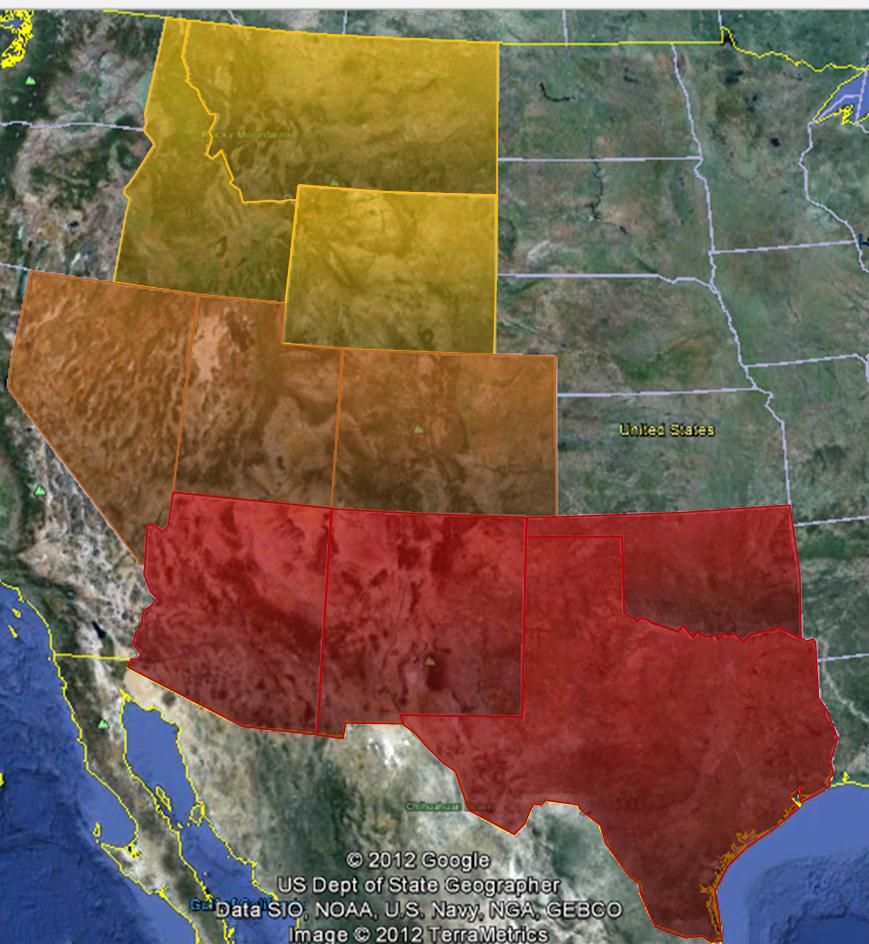
We start forging our way eastward now, hitting that Continental Divide.  For this post I wanted to figure out how to meld the tastes of the Mountain States with those of the Southwest.

Snacking State-by-State Redux IV of X: The Mountain West and Southwestern States

What are the Mountain (or Interior) West States?: Colorado, Idaho, Montana, Nevada, Utah, Wyoming; sometimes Arizona, New Mexico
What are the Southwestern States?: Arizona, New Mexico, Texas; sometimes California, Colorado, Nevada, Oklahoma, Utah
Important Cities: Albuquerque, Austin, Billings, Boise, Cheyenne, Dallas, Denver, Houston, Las Vegas, Oklahoma City, Phoenix, Salt Lake City, San Antonio, Santa Fe, Tucson, Tulsa
Regions and Subregions: Big Sky Country; Southwest; Rockies; Mountain, West South Central (US Census)
RAFT Nations: Bison (southern Alberta & Saskatchewan, eastern Montana and Colorado, parts of eastern Wyoming and New Mexico, Oklahoma, interior Texas). Chile Pepper (southern and central Arizona, southern New Mexico, western Texas, Sonora, Chihuahua, western Coahuila), Corn Bread & BBQ (southeastern Oklahoma, northeastern Texas), Gumbo (coastal Texas) Pinyon Nut (southern Idaho, Nevada, western Montana, Wyoming, Colorado, Utah, northern Arizona, northern New Mexico), Salmon (Idaho)
Foods the Region is Best Known For: frontier foods (beans, prairie breads, etc), Native American foods (pine nuts: Great Basin; wojapi, pemmican, wahuwapa wasna, etc: Big Sky and Great Plains; Three Sisters: Southwest); Southwestern (Tex-Mex in eastern Texas & Oklahoma, New Mexican in New Mexico, Arizona, Colorado, Nevada, Utah); bison, beef; potatoes (Idaho); huckleberries, blackberries (Northwest)
- - - - -

To fuse the Northwest with the Southwest, my mind went straight to fajitas.  I'm not sure why that was the first thing to pop up in my head, but it was, and it never left.  Sufficiently Southwestern and Mexican as it is, I sought to fuse that with bison, an animal you're quite likely to see in the Rockies and the Plains but not really in much of the Southwest.  The end result: bison fajitas, paired not with red bell peppers, mind you, but with some of the delicious Hatch chiles I bought and froze when still in season.  And what fajita wouldn't go with guacamole?

The Recipe: Bison and Hatch Chile Fajitas with Guacamole

While I mostly winged this recipe, I did get one part from an outside source: the (seemingly no longer updated) 10 Cent Diet blog, where a recipe for bison fajitas was posted in 2009.  The only part I used was the blogger's marinade for her bison strip loin steak (or in my case, flank steak, which several other recipes suggested). Further credit where it is due: the 10 Cent Diet blogger adapted her recipe from one she found on Epicurious.  And the citations go on.

For this recipe you will need the following:


* bison steak, in this case flank steak ($18/lb at Gunpowder Bison!  I justified it by saying that I don't buy this very often - I don't; I just don't have that kind of money.  If you have no locally available source of bison steaks, since most supermarkets don't carry bison and the ones that do pretty much only have it ground, get beef steak instead)

For the bison marinade, you need:
* garlic (I have both the cloves and garlic paste pictured.  I found it easier to just use the paste)
* cumin (had it - make sure you grind it up)
* salt (had it)
* lime juice (three limes for $1.50)
* olive oil (had it)

To assemble the fajitas, you will also need:

* Hatch chiles (if you can't find any or didn't get them when in stores - truly one of the few vegetables to appear in the supermarket "in season only" these days - just go ahead and use bell peppers, which won't have that Hatch chile flavor or heat.  Anaheims and poblanos will, however)
* onion (a few dimes for one)
* guacamole (I whipped up one from an avocado I bought, adding to that garlic, onion, tomato, jalapeño and leftover cilantro);
* And of course, large flour tortillas (not pictured.  Typically, I don't like the flour ones, much preferring the flavor and texture of the corn tortillas, but for a fajita you really need a large flour tortilla.  I bought the low carb whole wheat ones for about $3 at Harris Teeter)


Juice the limes - this will yield you about a little more than 1/4 cup.


Mix the lime juice with the rest of the fajita marinade ingredients in a large zip locked bag.


Put in the bison and let it marinade for about a day in the fridge.


The next day, you will want to fry up your bison - this flank steak took a total of about 15 minutes, with me constantly turning it over every few.


Lookin' nice, there...


Once out of the pan, put the bison on a plate and tent it with aluminum foil.


Next, strip the Hatch chile skins off, and de-seed them (I roasted them before freezing.  If roasted before freezing, the skins really come off like magic once you thaw them)


Pan fry the Hatch chiles with the onion.  They won't be crispy, since they are thawed.  Bell peppers will more likely keep their crunch though.


While that is cooking, throw together the guacamole.  I like mine chunkier like you find farther south in Mexico, not the thinner northern kind.


You are just about ready to put together some fajitas.  Heat up your flour tortillas.


Slice the flank steak thinly along the grain.


And throw a few pieces of bison in your tortilla with some chiles, onion and guacamole.


I didn't bring mine out in a fancy fajita pan, and mine were not sizzling at the table.  Still, I had some juicy, wonderful bison piled on top with spicy Hatch chiles and their distinctive vegetal taste.  I don't know if I can ever eat a fajita with just bell peppers again.  It is a filling meal and I only could eat about two at one sitting.  

- - - - -

We keep wending our way Back East, as we hit the prairies and the Great Lakes to sample hearty Midwestern food in this series just one more time.

Sources:

The 10 Cent Diet (blog).  "Bison Fajitas".  Posted January 27, 2009.

Some information also obtained from Wikipedia and from the Food Timeline State Foods webpage.

Sunday, September 23, 2012

Snacking State-by-State: Texas IV - Paciendo Estado-por-Estado: Coahuila I - ¡Qué enchiladas tan sabrosas tienen!


In my previous Texas post, I noted the difference between New Mexican and Tex-Mex food.  So what distinguishes Tex-Mex from Mex-Mex?


Official Name: State of Texas
State Nickname: The Lone Star State, The Republic of Texas
Admission to the US: December 29, 1845 (#28)
Capital: Austin (4th largest)
Other Important Cities: Houston (largest), San Antonio (2nd largest), Dallas (3rd largest), El Paso (6th largest),
Region: South, Southwest; West South Central (US Census)
RAFT Nations: Cornbread & BBQ; Chile Pepper; Gumbo; Bison
Bordered by: Oklahoma (north), Arkansas (northeast), Louisiana (east), Gulf of Mexico (southeast), Tamaulipas, Nuevo León & Coahuila (Mexico) and the Río Grande (south), Chihuahua (Mexico) (southwest), New Mexico (west)
Official State Foods and Edible Things: cast iron dutch oven (cooking implement - not edible, of course, but used for cooking), chili (dish), chiltepín (native pepper), Guadalupe bass (fish), jalapeño (pepper), longhorn (large mammal), pan de campo (bread), pecan (tree and health nut), prickly pear cactus (plant - for the pads and the fruit), sopaipilla and strudel (pastries), sweet onion (vegetable), Texas purple sage (native shrub), Texas red grapefruit (fruit). tortilla chips and salsa (snack)
Some Famous and Typical Foods: Where to begin?  Texas-style barbecue (specifically beef and beef brisket), Texas chili, chicken fried steak, Mexican (specifically Northern Mexican) foods, Tex-Mex foods (including migas, chile con carne and sopaipilla)Perhaps it is more instructive to say that "Mexican" is more similar to "New Mexican" cuisine (with a predominance of New Mexico chiles) than it is to "Tex-Mex" cuisine: fewer creamy sauces, fewer starches, less meat, little cumin.  But note also that Mexico has its own regional and state cuisines, so to define "Mexican" cuisine is almost as much a folly as defining "American" food (which I've been trying to do over the last year and a half, but still).  

To bring this discussion full circle, much of the cuisine of northern Mexico - the northeastern states of Chihuahua, Coahuila, Tamaulipas and Nuevo León, which all border Texas, plus Sonora (bordering Arizona) and Baja California (bordering California) has more meat (carne asada, barbacoa) and cheese (chile con queso, crema de queso) than cuisines farther into central and southern Mexico.  So maybe "Tex-Mex" and "northern Mex" have some similarities after all (more info from the notoriously unreliable Wikipedia's "Mexican cuisine" and "New Mexican cuisine" pages).

Like the other states that border Texas to the south, Coahuila is known for its barbecue, carne asada and various things it does with beef and goat.  But one very common dish that you find all over Texas and the Southwest is the humble enchilada.  The Spanish-language Guía de Tacos website [date unknown] has a recipe for Coahuila-style enchiladas.  I can only take their word for it that this is how enchiladas - Spanish for "covered in chiles" - are done in Coahuila:
Este tipo de enchiladas se preparan todas juntas en un recipiente o refractario bañadas de una deliciosa salsa tradicional de Coahuila. Son uno de los platillos más populares entre la comunidad estatal y se disfrutan calientes y ligeramente picosas. [Guía de Tacos date unknown]
(Translation: This type of enchilada is prepared [all put] together in a container or  oven-proof dish bathed in a delicious traditional sauce from Coahuila.  They are one of the most popular dishes among the state population and is enjoyed hot and lightly spicy. [translation mine])
I use this recipe from the Guía de Tacos website for my enchiladas al estilo Coahuila, below.

The Recipe: Enchiladas Norteñas (al estilo de Coahuila)

For these Coahuila-style enchiladas you will need: 


* corn tortillas (had them from the previous recipe)
* Mexican cheese (in this case, queso fresco, about $6 at H-Mart, the Korean supermarket with a very well-stocked Latin American selection.  Note that the original recipe calls for a quarter kilogram - 1/2 a pound - of shredded cheese.  I just crumbled up the queso fresco instead)
* ancho chiles (Productos Mirasol brand dried chiles, for about $1.50)
* garlic (had it)
* corn oil (had it too)
* onion (just needed half of one)
* salt (had it)


Seed the chiles and remove the stems.  You will dehydrate them in a minute...


But I wanted to toast them just a little first.


Soak the chiles for half an hour.  This will make them easier to pulse into a sauce.  Set aside the water you soak them in; you will use some of it later.


I found my typically useless blender was more useful than my food processor in pulsing the chiles (with a little chile water - I eyeballed it) into a sauce.  I still didn't get a terribly smooth sauce, but it worked well enough for me.


Boil down the chile sauce until thickened slightly.  Set aside.


Fry your tortillas in a skillet with some of the chile sauce.  The recipe actually wants you to boil down your homemade enchilada sauce in the skillet, set it aside, and heat up those tortillas.  I didn't do that, so i poured a little of the sauce into the skillet.


Toast each tortilla briefly on either side.


Now for your enchiladas: Take each tortilla, fill it with some cheese, and roll it up.  The recipe says "[Envuélven] las tortillas [como] si fueran tacos" (wrap the tortillas up as if they were tacos - they didn't spell the Spanish words too well) [Guía de Tacos date unknown].  I don't usually wrap tortillas up this way.  Maybe I'll try it sometime.


When you have enough of these tortillas wrapped up and lined up in a baking dish, cover with more cheese and onion pieces.


Cover the tortillas in the enchilada sauce.  Now they are "en-chile'd", enchiladas!


This is quite a filling dish, and it was satisfying to make my own enchilada sauce instead of using a bottled variety.  These taste even better heated up the next day, with the cheese and the sauce all warm.

Sources:

DallasVegan.com.  "Simple Vegan Migas…Brownsville Style".  DallasVegan.com, posted January 19, 2009.  Copyright 2010 DallasVegan.com.  All rights reserved.

Dr. Dan (blogger).  "Spicy 3 Chilies Texas Chili a la Crock Pot".  101 Cooking for Two, posted February 25, 2012.

Fain, Lisa.  "My Oven-Baked Brisket".  Homesick Texan, posted December 16, 2008.  Copyright Homesick Texan.  All rights reserved. 

Goldwyn, Craig "Meathead".  "Barbecue Beef Brisket Texas Style".  Amazing Ribs updated March 2, 2012.  Copyright Amazing Ribs.  All rights reserved.

Guía de Tacos (Guiadetacos.com).  "Enchiladas norteñas".  Date unknown.

Johnson Miller, Ruthie.  "Banh mi, oh my! The top five Vietnamese sandwich shops in Houston".  Culture Map Houston, posted February 26, 2011.  Copyright 2009-2012 Culture Map, LLC.  All rights reserved.

Nguyen, Andrea.  "Daikon and Carrot Pickle Recipe (Do Chua)".  Viet World Kitchen, posted May 17, 2009.  Copyright 2002-2012 Andrea Nguyen.  All rights reserved.

Nguyen, Andrea.  "Master Banh Mi Sandwich Recipe".  Viet World Kitchen, posted June 17, 2009.  Copyright 2002-2012 Andrea Nguyen.  All rights reserved.

Shuttlesworth, Patrise.  "Tex-Mex vs. New Mex: Not Just About Jalapeños or Green Chiles".  On the Road, a Houston Press Blog, posted March 26, 2012.  Copyright Houston Press.  All rights reserved.

Sliter Satterwhite, Shannon. "Make a Batch of Texas Chili".  Southern Living Magazine, October 2005.

von der Mehden, Fred R. "Vietnamese".  Handbook of Texas Online.  Date unknown.  Published by the Texas State Historical Association.  Copyright 2012 Texas State Historical Association, published by the Texas State Historical Association, and distributed in partnership with the University of North Texas Sponsors.  All rights reserved.

Some information also obtained from Wikipedia's "Texas" page and other pages, and the Food Timeline State Foods link to "Texas".

Friday, September 21, 2012

Snacking State-by-State: Texas III - Tex-Mex the meatless way (or "Yes, Texas, you've got a case of Vegans")


Back when I looked at New Mexico (and to some extent Arizona), I noted that not all Southwestern food was alike.  Instead, there are two distinct varieties, New Mexican and Tex-Mex.  Apparently, much of the Southwest sides with the "New Mexican" version of Southwestern cuisine.  But when much of the East Coast thinks about Southwestern food, it thinks about the variety from Texas.


Official Name: State of Texas
State Nickname: The Lone Star State, The Republic of Texas
Admission to the US: December 29, 1845 (#28)
Capital: Austin (4th largest)
Other Important Cities: Houston (largest), San Antonio (2nd largest), Dallas (3rd largest), El Paso (6th largest),
Region: South, Southwest; West South Central (US Census)
RAFT Nations: Cornbread & BBQ; Chile Pepper; Gumbo; Bison
Bordered by: Oklahoma (north), Arkansas (northeast), Louisiana (east), Gulf of Mexico (southeast), Tamaulipas, Nuevo León & Coahuila (Mexico) and the Río Grande (south), Chihuahua (Mexico) (southwest), New Mexico (west)
Official State Foods and Edible Things: cast iron dutch oven (cooking implement - not edible, of course, but used for cooking), chili (dish), chiltepín (native pepper), Guadalupe bass (fish), jalapeño (pepper), longhorn (large mammal), pan de campo (bread), pecan (tree and health nut), prickly pear cactus (plant - for the pads and the fruit), sopaipilla and strudel (pastries), sweet onion (vegetable), Texas purple sage (native shrub), Texas red grapefruit (fruit). tortilla chips and salsa (snack)
Some Famous and Typical Foods: Where to begin?  Texas-style barbecue (specifically beef and beef brisket), Texas chili, chicken fried steak, Mexican (specifically Northern Mexican) foods, Tex-Mex foods (including migas, chile con carne and sopaipilla)


So what is the difference?  Houston Chronicle blogger Patrise Shuttlesworth [2012] lays it out for us.  For starters, she notes that it isn't so much the ingredients - though the fabled New Mexico chile is a key component - as it is the cooking techniques that define New Mexican cuisine: roasted chiles and veggies, little frying, little meat and no cumin.  Tex-Mex, on the other hand, is noted for bigger portions, cheeses, cream gravies, combo plates and, yes, cumin:
Tex Mex tends to be comprised of a specific group of ingredients with a small allowance for regional variance. The ingredients you can count on are: large amounts of sour cream; copious amounts of cheese and meat; Jalapeños; Cumin/Comino; even olives; very large portions; very heavy dishes laden with chili con carne
As the unfortunate saying goes - "Everything is bigger in Texas!" That doesn't just refer to our hair. Our portion sizes, our plate sizes, our allotment of table tortilla chips and sadly, our people are bigger. Mexican food came from a culture of "only eat what's available because you grew or raised it." They did not know the Big Tex Taco plate or the Cowboy Bistek. We would be better off if we had never met them either. [Shuttlesworth 2012]
Sound familiar?  Yep, pretty much any Southwestern food we find on the East Coast sounds like this.  Delicious, but it makes you big.

Mind you, vegan cooking is not necessarily low fat cooking (try a good vegan mac & cheese, for example).  But it is meat and animal product free.  This is practically the opposite of Tex-Mex, and of Texan cooking in general.  But head to Austin and you can easily find vegan foods at the world's oldest and (to may eyes at least) Whole Foods.  I stopped in here twice on my visit to Austin earlier this year, and was blown away by the sheer size of the store and its offerings.  I guess everything is bigger in Texas.

Hopefully you can see how I'm tying Texas and veganism together.  But Tex-Mex?  Try out Austin Whole Foods' breakfast bar and you will find a healthy selection of vegan and vegetarian as well as meaty offerings.  One of my favorite ones was a vegan version of the popular Texan dish migas - a simple Southwestern dish composed of eggs scrambled with scraps of corn tortillas.  Migas is a counterpart to the Ashkenazi Jewish matzah brei (replace tortillas with matzah) or the hearty Midwestern hoppel poppel (replace tortillas with potatoes and salami).  But to veganize it you have to cut out the scrambled eggs. You could go the Whole Foods route and use egg substitute, or use what more innovative vegan chefs prefer: tofu, extra firm in this case.  This recipe from the Dallas Vegan blog [2009] is the one I used.

The Recipe: Vegan Migas

For this simple vegan version of migas you will only need the following:


* extra firm tofu (Dallas Vegan suggests Mori-Nu brand tofu.  I got the only "extra firm tofu" I could find at H-Mart for about $3)
* turmeric (this gives the tofu that scrambled egg-like color.  I had it on hand)
* corn tortillas (These were in the refrigerator case in H-Mart for about $2.50.  Please use corn and not flour tortillas, though I guess this would work with flour ones)
* olive oil (had it)
* cumin (had it too)
* garlic (had this too)
* salt and pepper (yup)


Start by cutting your tortillas into squares.


Toast the tortillas squares in a skillet with some olive oil.  When slightly crispy, remove and set aside.


Take your tofu and turmeric and add them to the olive oil. Mush up the tofu with a spoon.


Add your other spices - cumin, garlic, salt and pepper.


Stir for a few minutes until it is warm and looks like scrambled eggs.


Add your tortilla squares and cook for a few minutes more.


I don't typically eat vegan.  Plus, I have eggs.  But this is a good and I daresay hearty way to use up some tofu (again, extra firm.  Don't use the soft stuff).  I also have to admit that, while it didn't exactly taste like eggs, I didn't really notice that it didn't.  Add a few sprigs of cilantro on the side and maybe some tomatoes and you have a mighty fine breakfast dish.

Sources:

DallasVegan.com.  "Simple Vegan Migas…Brownsville Style".  DallasVegan.com, posted January 19, 2009.  Copyright 2010 DallasVegan.com.  All rights reserved.

Dr. Dan (blogger).  "Spicy 3 Chilies Texas Chili a la Crock Pot".  101 Cooking for Two, posted February 25, 2012.

Fain, Lisa.  "My Oven-Baked Brisket".  Homesick Texan, posted December 16, 2008.  Copyright Homesick Texan.  All rights reserved. 

Goldwyn, Craig "Meathead".  "Barbecue Beef Brisket Texas Style".  Amazing Ribs updated March 2, 2012.  Copyright Amazing Ribs.  All rights reserved.

Guía de Tacos (Guiadetacos.com).  "Enchiladas norteñas".  Date unknown.

Johnson Miller, Ruthie.  "Banh mi, oh my! The top five Vietnamese sandwich shops in Houston".  Culture Map Houston, posted February 26, 2011.  Copyright 2009-2012 Culture Map, LLC.  All rights reserved.

Nguyen, Andrea.  "Daikon and Carrot Pickle Recipe (Do Chua)".  Viet World Kitchen, posted May 17, 2009.  Copyright 2002-2012 Andrea Nguyen.  All rights reserved.

Nguyen, Andrea.  "Master Banh Mi Sandwich Recipe".  Viet World Kitchen, posted June 17, 2009.  Copyright 2002-2012 Andrea Nguyen.  All rights reserved.

Shuttlesworth, Patrise.  "Tex-Mex vs. New Mex: Not Just About Jalapeños or Green Chiles".  On the Road, a Houston Press Blog, posted March 26, 2012.  Copyright Houston Press.  All rights reserved.

Sliter Satterwhite, Shannon. "Make a Batch of Texas Chili".  Southern Living Magazine, October 2005.

von der Mehden, Fred R. "Vietnamese".  Handbook of Texas Online.  Date unknown.  Published by the Texas State Historical Association.  Copyright 2012 Texas State Historical Association, published by the Texas State Historical Association, and distributed in partnership with the University of North Texas Sponsors.  All rights reserved.

Some information also obtained from Wikipedia's "Texas" page and other pages, and the Food Timeline State Foods link to "Texas".

Sunday, December 19, 2010

Snacking State-by-State: Arizona II - Cactus for Breakfast

While the previous machaca burro recipe was very filling, I still wanted to get some use out of nopal cactus. Also known as the prickly pear (or occasionally, the tuna) cactus, Southwesterners have been subsisting off both the cactus pads and fruits for generations.

Snacking State-by-State: Arizona

Official Name: State of Arizona
State Nicknames: The Grand Canyon State; The Copper State
Admission to the US:
February 14, 1912 (#48)
Capital: Phoenix (largest city)
Other Important Cities: Tucson (2nd largest), Mesa (3rd largest), Glendale (4th largest)
Region: West (Southwest); Mountain (US Census)
RAFT Nations: Chile Pepper, Pinyon Nut
Bordered by: Utah (north); New Mexico (east); Sonora (south); California, Nevada & Baja California (west); Colorado (northeast corner - Arizona is one of the Four Corners states)
Official State Foods and Edible Things: Arizona Trout (fish)
Some Famous & Typical Foods: chiles (mild in the south), tortillas (flour in the south), Navajo taco, beef, nopal cactus (both pad and fruit), burritos, chimichangas, menudo

The first time I ever ate them, not long after moving to California in the late 90's, I was less than enthused. A few years later I had a large tostada topped with just about everything while strolling through the Zócalo in Mexico City. It had nopal on it, and again, I was less than enthused. But I was willing to give it one more try, for the sake of social science, and the blog.

The recipe: Nopales con Huevos

I have been unable to find an Arizona-specific recipe with nopal in it (note: I might have to give up this notion of only state-specific recipes if I want this project to continue). The closest thing I could find was a recipe on the AZCentral.com website, which was good enough. Among a list of nopal recipes was a Mexican favorite: nopales con huevos - nopal with eggs.

This one is much simpler and faster than the whole machaca recipe - and yes, the most exotic thing you will need will be the nopal. It's not so easy to find nopal pads in the supermarket, but it is easier than it used to be: there are more and more Latin American markets all over Baltimore (and DC has far more, and isn't that far away), plus some of the bigger supermarkets carry them. But they are a pain in the ass to prepare - you have to remove the stickers completely, then prep and wash them, and remove the gooeyness. Or you could just do what I did, and buy precut nopal in a jar. Doña Maria is an easy brand to find in this area.

I had all of the ingredients on hand once I bought the nopal in a jar (note: the recipe I used was too big, so again, I halved it):

* nopal (a jar runs about $2.50 or $3)
* eggs (four in this case; this will last a few servings)
* salt and pepper, of course
* olive oil (no bacon grease this time)
* onion and garlic
* again, tortillas and salsa

Whisk the eggs with salt and pepper, then chop the nopales and fry them up for a few minutes in olive oil with garlic and onions, Pour in the eggs, and cook for a few minutes. I did not scramble them, but I would recommend that you do.

There you have it! Scrambled eggs with nopal cactus. This time, I did not find the nopal as offensive as I had before. In fact, I hardly tasted it at all - it was kind of like a green bean, with less flavor. But none of the typical sliminess that often goes with not-so-well-prepared nopal.


I am almost done with the A-states. We've gotten through the Deep South, the Arctic North and the desert Southwest. Next I head back to the South - not that Deep, but South nonetheless, for The Natural State and the first of the year: Arkansas.

Sources:

Alters Jamison, Cheryl, and Bill Jamison. The Border Cookbook: Authentic Home Cooking of the American Southwest and Northern Mexico. The Harvard Common Press: Boston, 1995.

AZCentral.com. Nopales recipes. Posted date June 24, 2005.

Long, Kathi. The Southwest: New American Cooking. From the Williams-Sonoma "New American Cooking" series, Chuck Williams, general editor. Time-Life Books: San Francisco, 2001.

Some information also obtained from Wikipedia's "Arizona" page and the Food Timeline State Foods webpage link to "Arizona".

Snacking State-by-State: Arizona I - El Burro Más Grande

I have visited Arizona a few times, none of which was recently. My sister and her husband and their dog used to live in Phoenix, and my crazy uncle (we all have a crazy uncle) and his ex-wife still does. So I am not too unfamiliar with the distinctly Southwestern flavors of Arizona: Navajo and Hopi in the northeast (and Native American throughout), cattle rancher in the north, plus the heaviest doses of Mexican all over the whole of the state.


Snacking State-by-State: Arizona

Official Name: State of Arizona
State Nicknames: The Grand Canyon State; The Copper State
Admission to the US:
February 14, 1912 (#48)
Capital: Phoenix (largest city)
Other Important Cities: Tucson (2nd largest), Mesa (3rd largest), Glendale (4th largest)
Region: West (Southwest); Mountain (US Census)
RAFT Nations: Chile Pepper, Pinyon Nut
Bordered by: Utah (north); New Mexico (east); Sonora (south); California, Nevada & Baja California (west); Colorado (northeast corner - Arizona is one of the Four Corners states)
Official State Foods and Edible Things: Arizona Trout (fish)
Some Famous & Typical Foods: chiles (mild in the south), tortillas (flour in the south), Navajo taco, beef, nopal cactus (both pad and fruit), burritos, chimichangas, menudo

The Mexican aspect of Arizona's cuisine is specifically tied to the cuisine of Sonora, the Mexican state right across the border. The two mirror each other very well. Note: I've also passed through Sonora state, on a major bus trip from Morelia (Michoacán) to Mexicali (Baja California) by way of Guadalajara (Jalisco), but that's a story for another day.

If you want to pin down Southwestern food, it is fairly easy. If you want to pin down what is specifically Arizonan, that is a bit more difficult. Kathi Long tries to do this in her cookbook on The Southwest from Williams-Sonoma, focusing on the most notable influences in Arizona cooking, from Mexico:
Arizona cooks have...looked to Mexico for inspiration. The southern part of the state borrowed from the cooking of Sonora, which lies directly across the border, a culinary alliance that reveals itself in large, thin flour tortillas, the use of nopal cactus, and a menu of mildly spiced dishes. Elsewhere in the state, residents traditionally dine on Mexican chimichangas..., menudo..., and giant burritos, as well as the more staid ranch fare introduced by early cattlemen and other settlers from the Midwest and East Coast. [Long, p. 12]
In the spirit of Arizona's Sonoran influences, I wanted to find a recipe that incorporated all three of these elements: nopal (that is, prickly pear) cactus, mild chiles and large, flour tortillas. They are out there, but I hadn't found them before I stumbled upon the massive compendium by Cheryl and Bill Jamison, The Border Cookbook: Authentic Home Cooking of the American Southwest and Northern Mexico (also on Google Books). In Arizona, burritos are standard fare - particulary massive ones. The Jamisons rightly call those burros, since a burrito is just a "little burro".

Among their many recipes for burros and burritos, one breakfast creation specifically piqued my interest: their machaca breakfast burro. Since it comes straight from Phoenix, it seemed like a good place to start.

The recipe: Machaca Breakfast Burro

As the Jamisons point out, machaca originally referred to beef or other meat.
Machaca originally referred to meat (usually beef) that was seasoned, dried for preservation, and later tenderized by pulverizing and cooking. The word comes from the verb machacar, meaning to pound or crush... Many people now use the term to describe any beef cooked well-done with seasonings and then shredded. [Alters Jamison et al., p. 75]

I don't buy a lot of meat these days, but I saw this as a great way to use up some frozen beef in my freezer. Before my former neighbor moved to Nova Scotia a few months ago he gave me some frozen beef he would've otherwise thrown out. Thawed it amounted to a pound and a half - perfect for a halved version of this recipe. This made the amount of money I put out for this recipe unusually light:

* beef (free!!! Thanks, Dale, if you ever read this)
* salt and pepper (have)
* bacon grease (if you have the bacon, it's not that difficult to make some on the spot)
* beef stock (had none, so I had to turn to the Maggi chicken bouillon in my pantry)
* onion (have)
* garlic (have)
* small Roma tomatoes (about $1 for two)
* mild green chiles (one poblano chile for about 50 cents)
* fresh lime juice (one lime for about the same)
* egg (this was optional - I wasn't planning to use one at the time but decided to add one later)
* burrito-size flour tortillas (the priciest item, about $3 for a package of eight)

This recipe was a bit more involved than many I do. First, you must briefly brown the beef in some of the bacon grease, then cook in a Dutch oven over low heat for over an hour with broth, onion & garlic. Wait for it to cool down a little, then break it up and - here's the part that I haven't done before - throw it in your food processor until shredded. You must do this in small batches lest it not shred everything.

Fry the beef a bit more until slightly drier and until some patches of beef look darker and more dessicated. Remove it, and cook the rest of the onion & garlic with the rest of the bacon grease, the reserved liquid from the Dutch oven, tomato, chile pepper (roasted and chopped) and lime juice. Add the beef and cook for about 25 minutes.

I never thought I would do this, but why the hell not?
I'm not making this for PETA after all...


The closeup hides the fact that I still need to clean my stove

25 minutes later... okay, so the stove isn't that bad...

Here is where I put the machaca mixture in the fridge, which the Jamisons say you can do at this point. I brought it out a day or so later and added an egg. Really, it added very little to the dish. I could neither taste it nor even see it at all. In retrospect, it was not necessary, and I wouldn't add it again. To be sure, the Jamisons day that part is optional.

The rest is ridiculously easy: just spoon the hot mixture into a large (Sonoran-style) flour tortilla and make yourself a burro. Eat it with salsa (my choice: a roasted tomato salsa from the Jamison's same book called salsa del norte).

Okay, mine really was more the size of a burrito, but still...

The thing about machaca-style beef: it isn't supposed to be soft and juicy, per se. Perhaps I did something wrong. I mean, it wasn't dripping and wet, but it was pleasantly soft and just a bit moist. Plus, the long, slow cooking with tomatoes and roasted poblano chile pepper, onions and garlic, bacon grease (yet another use!!!) and lime juice just blends together in the most beautiful way. I'm sorry if I'm starting to sound "foodie-ish". I really don't mean to. It was just a beautiful thing to eat. Even if you decide to turn that burro into the more diminutive burrito.

I have been subsisting off machaca burros and burritos since. I may even make a quesadilla if the mood strikes me, complete with thinkly sliced queso fresco, which is not easy to melt, let me tell you.

Sources:

Alters Jamison, Cheryl, and Bill Jamison. The Border Cookbook: Authentic Home Cooking of the American Southwest and Northern Mexico. The Harvard Common Press: Boston, 1995.

AZCentral.com. Nopales recipes. Posted date June 24, 2005.

Long, Kathi. The Southwest: New American Cooking. From the Williams-Sonoma "New American Cooking" series, Chuck Williams, general editor. Time-Life Books: San Francisco, 2001.

Some information also obtained from Wikipedia's "Arizona" page and the Food Timeline State Foods webpage link to "Arizona".